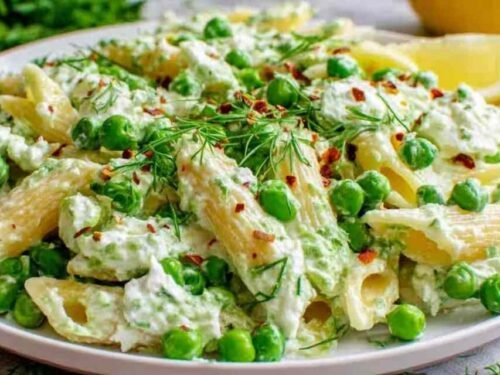
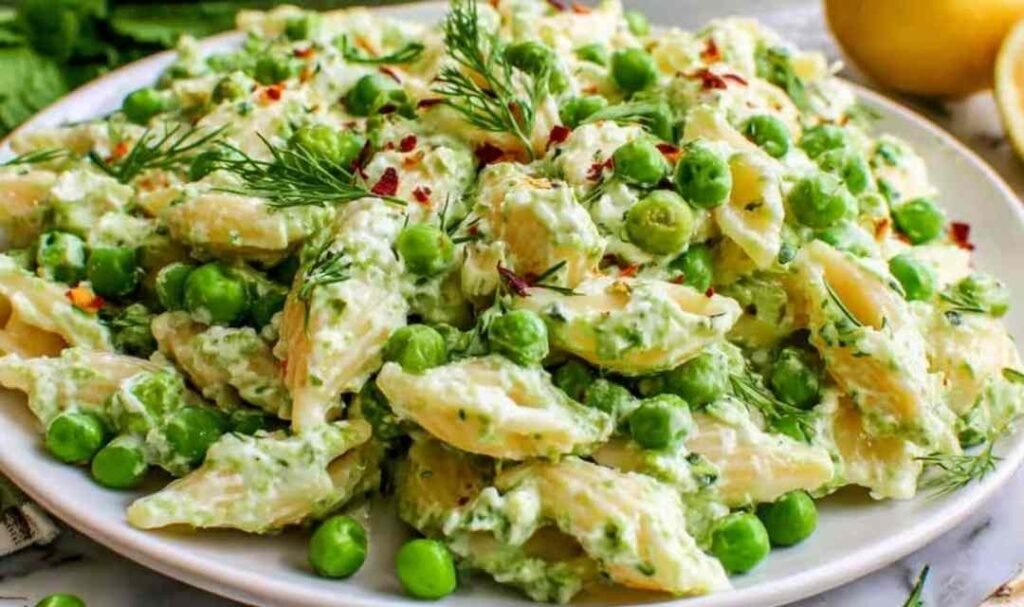
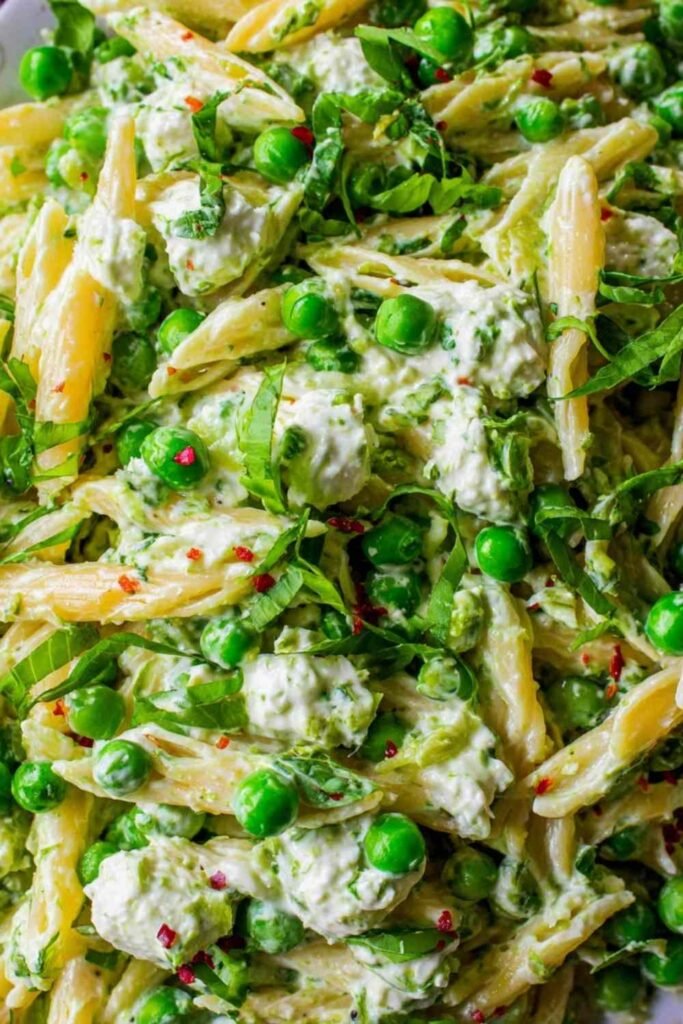
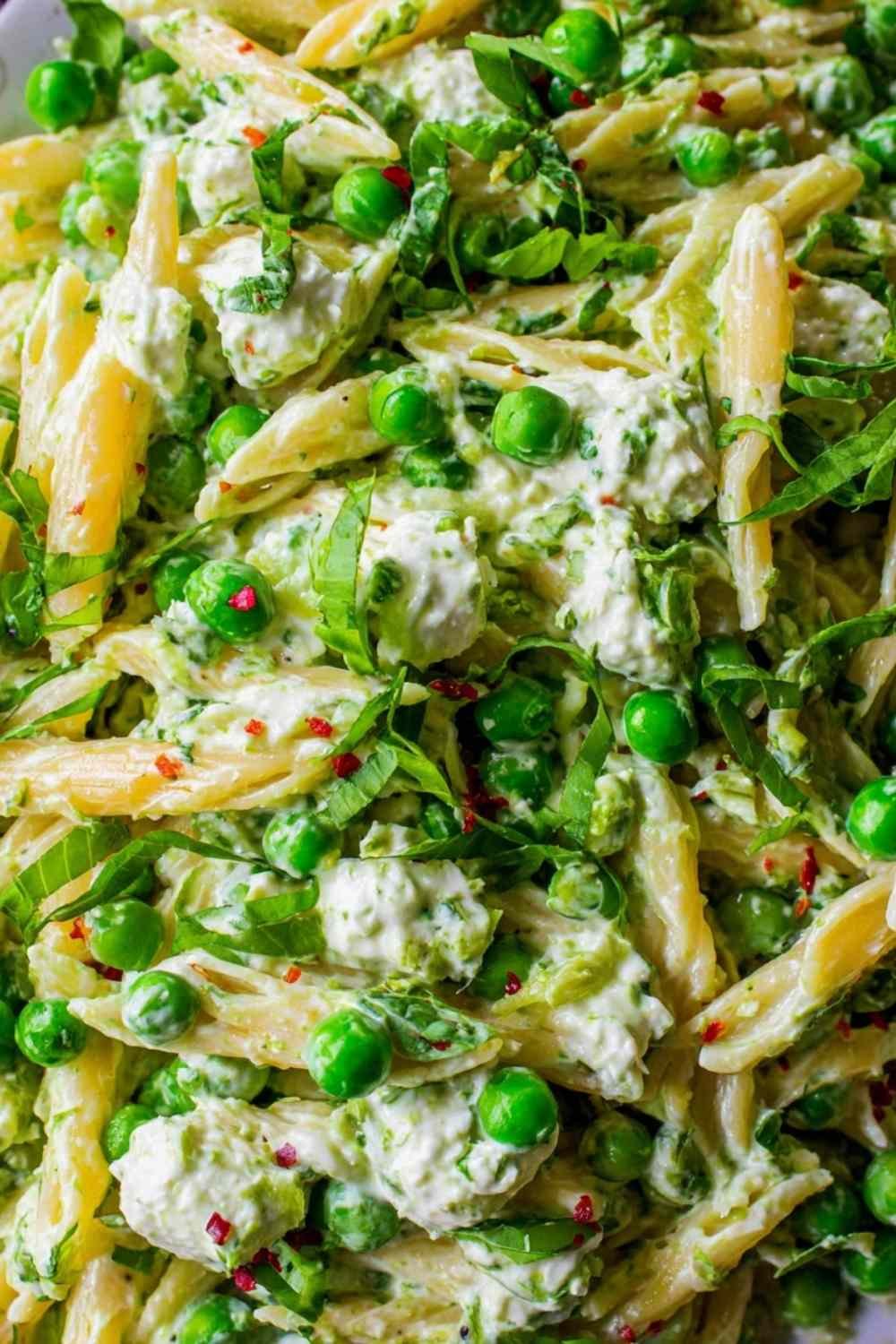
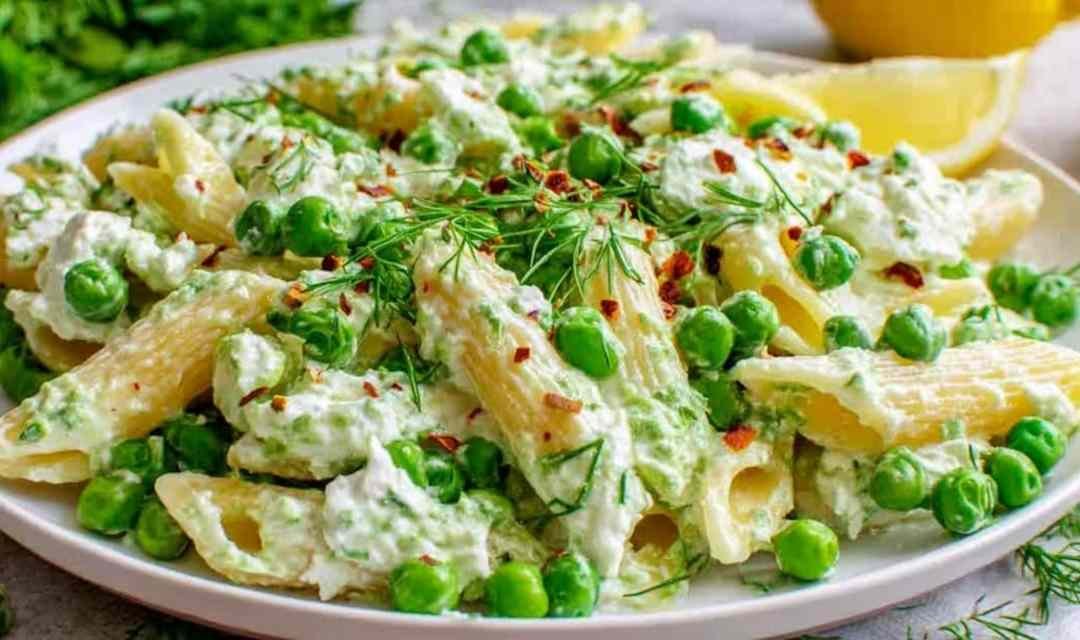
Lemon ricotta pasta with fresh peas is the kind of vegetarian dinner that makes you forget you are not eating meat. Creamy, bright, and finished with toasted pine nuts and Parmesan, this pasta comes together in just 20 minutes with a handful of simple ingredients.
I first made this recipe during a summer when fresh peas were everywhere at the farmers market and I wanted something light but still satisfying for dinner. The sauce is made by blending ricotta with peas, garlic, lemon, and herbs in a food processor, and then tossing it straight with hot pasta. No heavy cream, no butter roux, just clean fresh flavor that tastes far more impressive than the effort involved. This lemon ricotta pasta has become one of my favorite go-to meals when I want something that feels a little special without spending an hour in the kitchen. The lemon keeps it bright, the ricotta keeps it rich, and the peas add a pop of color and sweetness that makes every bite interesting. This is about to become your new favorite!
Table of Contents
Ingredients for Lemon Ricotta Pasta with Fresh Peas
I always use whole milk ricotta here because it gives the sauce a creamier, richer texture than part-skim. The difference is noticeable and worth it. Here is everything you need:
For the Pasta:
1 lb penne, ziti, or rigatoni
1 tbsp kosher salt (for the pasta water)
1/3 cup pine nuts (toasted) – I recommend watching these closely on the stove; they go from golden to burned in under a minute
For the Ricotta Pea Sauce:
2 medium cloves garlic (smashed)
1/3 cup fresh parsley (any kind)
1 tsp dried oregano
1 tsp fresh thyme (or 1/2 tsp dried)
1 1/2 cups peas (frozen and thawed, or fresh) – my preference is frozen peas thawed quickly in the microwave when fresh are not available
1 (15 oz) tub whole milk ricotta cheese
1 tbsp lemon zest (from 1 large lemon)
2 to 3 tbsp fresh lemon juice, to taste
1/4 cup olive oil
2 tsp kosher salt (start with 1 1/2 tsp if using table salt)
3/4 tsp black pepper
To Assemble:
1 cup peas (fresh is best for this part)
1/2 cup grated Parmesan – pro tip: freshly grated Parmesan melts into the pasta better than pre-shredded
In my experience, the key to this recipe is making the sauce while the pasta cooks so everything finishes at the same time. Read through the steps once before starting and the timing will feel natural.
Step 1: In a large high-sided skillet, toast the pine nuts over medium heat. Stir constantly and watch carefully. They go from golden to burned very fast. Once fragrant and lightly golden, remove to a plate immediately.
Step 2: Fill the same skillet with water. Add 1 tablespoon kosher salt and bring to a boil over high heat. The water should taste like light seawater.
Step 3: Add the pasta and cook, stirring occasionally, until al dente. Check the package for exact timing, usually about 10 minutes. Do not overcook.
Step 4: While the pasta cooks, make the sauce. In a food processor or blender, add the smashed garlic and parsley. Pulse until finely chopped.
Step 5: Add 1 1/2 cups peas, ricotta, lemon zest, lemon juice, 1/4 cup olive oil, kosher salt, and black pepper. Pulse until the sauce comes together with some texture. Do not blend fully smooth — a little texture is what makes this sauce feel rustic and real.
Step 6: Drain the pasta and return it to the pot. Drizzle lightly with olive oil and stir to prevent sticking.
Step 7: Pour the ricotta pea sauce over the pasta and stir to coat everything evenly.
Step 8: Add the remaining 1 cup of peas and stir again. If using fresh peas and you prefer them lightly cooked, you can add them to the boiling pasta for the last 1 to 2 minutes before draining.
Step 9: Stir in the grated Parmesan and a generous drizzle of olive oil. Add crushed red pepper to taste.
Step 10: Divide into bowls and top each serving with toasted pine nuts. Serve immediately.
Best Pairings for Lemon Ricotta Pasta with Fresh Peas
This dish has bright, creamy, herb-forward flavor that pairs beautifully with simple sides and light proteins. Here are some of my favorite combinations:
Light and Healthy Broccoli Pasta: If you want to keep the meal entirely vegetarian and pasta-forward, this broccoli pasta is a natural companion dish that shares the same clean, simple flavor profile and works well served alongside or as a lighter second option.
Healthy Tomato Zucchini Pasta: A fresh tomato and zucchini pasta brings a slightly acidic, summery contrast that pairs well with the creamy lemon ricotta sauce, making it a great addition when you want more variety on the table.
Mediterranean Chickpea Salad with Lemon Vinaigrette: The bright lemon vinaigrette in this chickpea salad mirrors the lemon notes in the pasta and adds plant-based protein and crunch. It is one of the best sides for lemon ricotta pasta when you want something fresh and light.
Homemade Cheesy Breadsticks: Warm, cheesy breadsticks are made for dipping into creamy pasta sauce. They add comfort and texture contrast that rounds out this dinner perfectly for a family table.
Chickpea Feta Avocado Salad: A cool, creamy avocado salad with chickpeas and feta adds richness and freshness alongside the pasta without competing with its flavors. It keeps the meal vegetarian and nutritionally balanced.
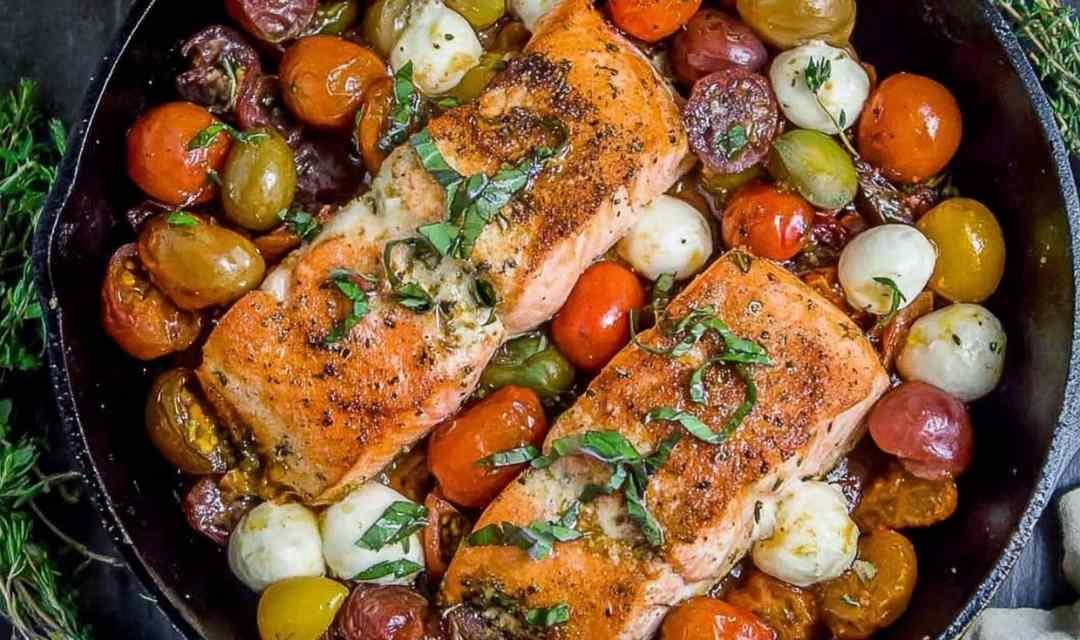
Pan Seared Salmon with Arugula Pesto: For a non-vegetarian pairing, pan-seared salmon with herby pesto sits naturally alongside this lemon pasta. The salmon adds protein and the arugula pesto complements the fresh herb notes in the ricotta sauce.
Store leftover pasta in a sealed airtight container in the refrigerator for up to 3 days. The ricotta sauce will thicken as it sits, which is completely normal. Do not freeze this dish as ricotta-based sauces become grainy and separated after thawing.
To reheat, I recommend warming gently on the stovetop over low heat with a splash of water or olive oil to loosen the sauce. Stir frequently. The microwave works too, just reheat in 60-second intervals and stir in between to keep the texture even.
Pro tip: This lemon ricotta pasta also tastes great served at room temperature as a pasta salad for lunch the next day. Add a little extra lemon juice and a fresh drizzle of olive oil before serving cold.
Frequently Asked Questions
Can I use frozen peas instead of fresh?
Yes, frozen peas work perfectly in this recipe. Thaw them quickly in the microwave before blending into the sauce. Frozen peas are blanched before freezing so they are already partially cooked and safe to eat without additional heating. Do not use canned peas, as the texture and flavor are too soft and flat for this dish.
Can I add protein to this pasta?
Absolutely. Grilled chicken, shredded rotisserie chicken, or crumbled cooked bacon are all great additions. You can also serve this alongside baked salmon for a complete non-vegetarian meal. The lemon and herb flavors pair naturally with most proteins.
What pasta shape works best?
Penne, ziti, and rigatoni all work well because their ridged surfaces hold the creamy ricotta sauce better than smooth pasta. Farfalle or fusilli are also good options. Avoid very thin pasta like angel hair, which can get lost in a thick sauce like this one.
Conclusion
Lemon ricotta pasta with fresh peas is a vegetarian dinner that delivers real satisfaction in just 20 minutes. The creamy blended ricotta sauce is fresh, bright, and easy to make with pantry staples. Try this recipe for your next weeknight dinner and see how good simple, wholesome ingredients can taste together
Creamy vegetarian pasta tossed in a blended ricotta and pea sauce with garlic, lemon, and fresh herbs, topped with toasted pine nuts and Parmesan. Ready in 20 minutes.
1lbpenne ziti or rigatoniany short ridged pasta works
1tbspkosher saltfor pasta water
0.33cuppine nutstoasted
2medium cloves garlicsmashed
0.33cupfresh parsleyany kind
1tspdried oregano
1tspfresh thymeor 1/2 tsp dried
1.5cuppeasfrozen and thawed or fresh, for the sauce
15ozwhole milk ricotta cheese1 tub
1tbsplemon zestfrom 1 large lemon
2tbspfresh lemon juice2 to 3 tbsp to taste
0.25cupolive oilfor sauce
2tspkosher saltfor sauce, start with 1.5 tsp if using table salt
0.75tspblack pepper
1cuppeasfresh preferred, to stir in at the end
0.5cupgrated Parmesanfreshly grated preferred
2tbspolive oilto drizzle over finished pasta, 1 to 4 tbsp to taste
crushed red pepperto taste
Equipment
Large high-sided skillet
Food processor or blender
Colander
Large pot or use the skillet for boiling pasta
Method
Toast pine nuts in a large high-sided skillet over medium heat, stirring constantly, until golden and fragrant. Remove to a plate immediately.
Fill the skillet with water, add 1 tablespoon kosher salt, and bring to a boil over high heat.
Cook pasta until al dente, about 10 minutes. Check package for timing. Drain and return to pot. Drizzle with olive oil and stir.
While pasta cooks, make the sauce. In a food processor, pulse garlic and parsley until finely chopped.
Add 1.5 cups peas, ricotta, lemon zest, lemon juice, 1/4 cup olive oil, kosher salt, and black pepper. Pulse until combined but still slightly textured. Do not blend fully smooth.
Pour ricotta sauce over drained pasta and stir to coat evenly.
Add remaining 1 cup peas and stir again.
Add grated Parmesan and a drizzle of olive oil. Add crushed red pepper to taste.
Divide into bowls and top each serving with toasted pine nuts. Serve immediately.
Notes
Do not use canned peas — frozen thawed or fresh only. If using fresh peas and you want them lightly cooked, add to the boiling pasta for the last 1 to 2 minutes before draining. Do not freeze leftovers as ricotta sauce becomes grainy when thawed. Store refrigerated up to 3 days. Reheat gently with a splash of water or olive oil. Great served at room temperature as a pasta salad the next day.
a recipe developer, food enthusiast, and busy parent based in Denver, CO. I created Yumnights because I believe that delicious, healthy dinners shouldn’t require hours in the kitchen or a culinary degree to master.