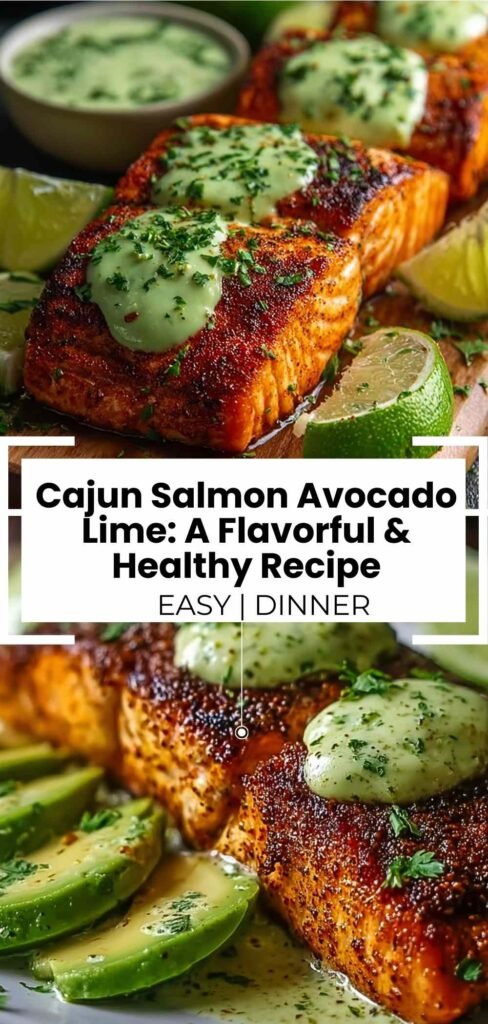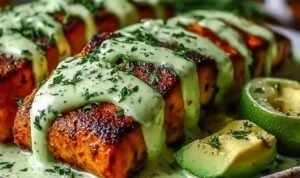



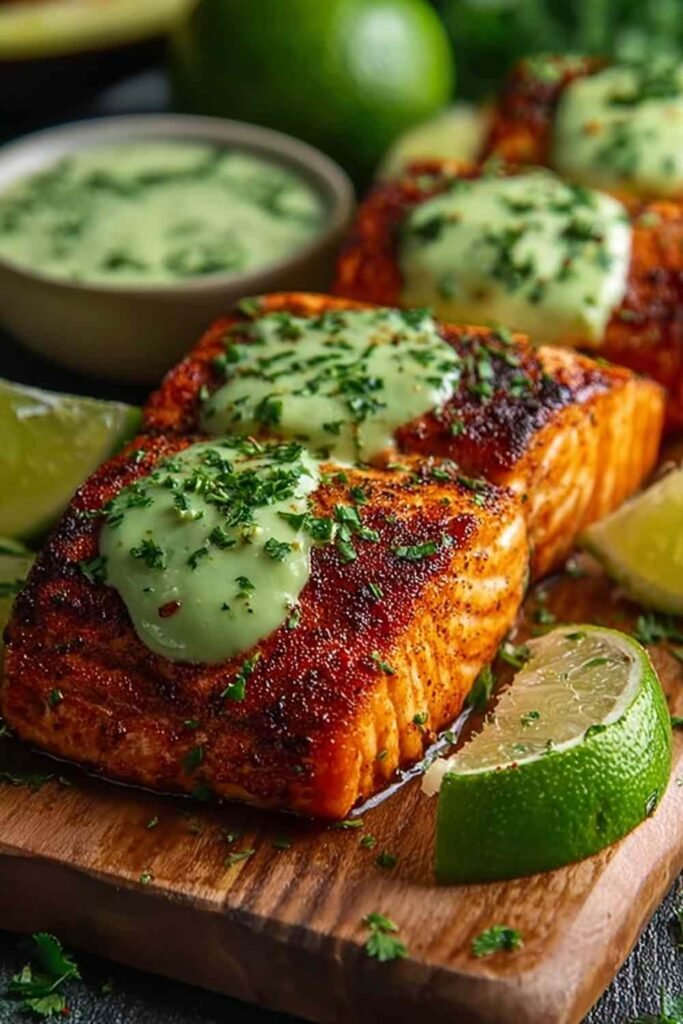
Cajun Salmon Avocado Lime delivers bold, smoky flavors with a creamy, tangy topping that turns simple salmon into something restaurant-worthy. I created this recipe after a trip to New Orleans left me craving those Cajun spices, but without the heavy sides. The spice-rubbed salmon gets a beautiful crust while staying tender inside, and that avocado lime crema? It cools down the heat while adding richness.
Table of Contents
Ingredients for Cajun Salmon Avocado Lime
I always pat my salmon fillets completely dry before seasoning because moisture prevents that golden crust we’re after. This one step makes the difference between good salmon and restaurant-quality results. In my experience, using a quality Cajun seasoning blend saves time without sacrificing flavor.
For the Salmon:
- 2 (6-ounce) salmon fillets (skin on or off, about 1-inch thick)
- 2 tablespoons Cajun seasoning (I recommend Tony Chachere’s or make your own)
- 2 tablespoons olive oil, divided
- 1 tablespoon fresh lemon juice
- 1 teaspoon garlic powder
- 1/2 teaspoon smoked paprika
- Salt and freshly ground black pepper (to taste)
For the Avocado Lime Crema:
- 2 ripe avocados (should yield slightly to gentle pressure)
- 1/4 cup sour cream (Greek yogurt works as a healthier alternative)
- 1/4 cup fresh lime juice (from about 2 limes, my preference is always fresh-squeezed)
- 2 tablespoons chopped fresh cilantro
- 1 clove garlic (minced)
- 1/4 teaspoon salt (or to taste)
- 1/8 teaspoon cayenne pepper (optional, I usually add this for extra kick)
- 2 to 3 tablespoons water (to thin to desired consistency)
Step-by-Step Instructions
I recommend heating your skillet until the oil shimmers before adding the salmon because this creates that perfect golden crust without sticking.
Step 1: Pat the salmon fillets completely dry using paper towels, removing all surface moisture. This ensures proper browning and helps the seasoning stick.
Step 2: In a small bowl, combine Cajun seasoning, 1 tablespoon olive oil, lemon juice, garlic powder, smoked paprika, salt, and pepper. Mix thoroughly to create a paste. Rub this mixture evenly over both sides of each fillet, pressing gently so it adheres.
Step 3: For deeper flavor, marinate the seasoned salmon in the refrigerator for 15 to 30 minutes. If short on time, you can cook immediately, though marinating allows the spices to penetrate the fish.
Step 4: Heat a large cast iron or non-stick skillet over medium-high heat. Add the remaining 1 tablespoon olive oil and heat until it shimmers but doesn’t smoke.
Step 5: Place salmon fillets in the hot skillet, either skin-side down if using skin-on fillets, or presentation-side down if skinless. Press gently with a spatula for even contact. Sear undisturbed for 4 to 5 minutes until the bottom crisps and releases naturally from the pan. If the salmon sticks when you try to flip it, give it another minute.
Step 6: Flip carefully and cook for 3 to 4 additional minutes until the salmon flakes easily with a fork and reaches an internal temperature of 145°F. The fish should be opaque throughout. These times work for 1-inch thick fillets, so adjust for thicker or thinner cuts.
Step 7: While the salmon cooks, combine avocados, sour cream, lime juice, cilantro, garlic, salt, and cayenne pepper in a food processor or blender. Blend until completely smooth and creamy. The mixture should be thick enough to coat the back of a spoon but still pourable. Add water one tablespoon at a time until you reach desired consistency.
Step 8: Remove salmon from heat and let rest for one minute to redistribute juices before serving. Drizzle generously with the avocado lime crema.
Perfect Pairings for Cajun Salmon Avocado Lime
The bold, spicy flavors of this salmon pair beautifully with sides that offer cooling contrast and satisfying textures.
Cilantro Lime Rice: Fluffy rice with bright citrus notes complements the Cajun spices perfectly while soaking up that creamy avocado topping. The cilantro ties both components together.
Black Beans and Corn: This combination adds fiber and creates a complete protein meal. The sweetness of corn balances the salmon’s heat, while black beans provide earthy depth.
Roasted Sweet Potatoes: Natural sweetness and caramelized edges provide an excellent counterpoint to the smoky, spicy fish. Try this Maple Glazed Chicken with Sweet Potatoes technique with your sweet potatoes.
Street Corn Chicken Rice Bowl Elements: Borrow the charred corn and cotija cheese from this recipe to create a complete bowl experience with your salmon.
Fresh Garden Salad: Crisp greens with a light vinaigrette cut through the richness of the crema and add refreshing crunch. Keep it simple with romaine, cucumber, and tomatoes.
Cauliflower Rice: For a lighter, low-carb option that keeps the meal healthy while letting the salmon shine as the star. Season it simply with salt and lime.
Keeping It Fresh
Store cooked salmon and avocado lime crema in separate airtight containers in the refrigerator for up to 2 days. Keeping them separate prevents the crema from browning and maintains the salmon’s texture.
Reheat salmon gently in a skillet over low heat or in the oven at 275°F for 8 to 10 minutes. I recommend avoiding the microwave, which can dry out the fish and create uneven hot spots. The crema is best served cold or at room temperature.
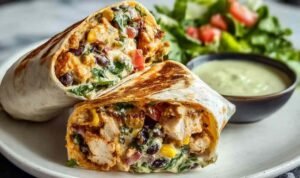
This recipe works beautifully for meal prep. Prepare the salmon and crema on Sunday, then assemble fresh bowls or tacos throughout the week by adding your favorite vegetables and grains. Press plastic wrap directly onto the crema surface before refrigerating to prevent browning.
FAQs
Can I use frozen salmon for this recipe?
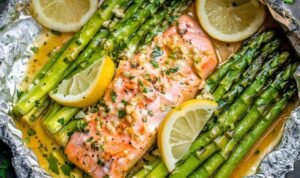
Yes, just thaw it completely in the refrigerator overnight and pat it thoroughly dry before seasoning. Excess moisture prevents proper browning and that crispy crust.
What if I don’t have Cajun seasoning?
Make your own by combining 1 tablespoon paprika, 1 teaspoon each of garlic powder, onion powder, dried oregano, and dried thyme, plus 1/2 teaspoon cayenne pepper. Adjust the heat level to your preference.
How do I know when the salmon is perfectly cooked?
The salmon should be opaque throughout and flake easily when tested with a fork. An instant-read thermometer should register 145°F in the thickest part. The fish will continue cooking slightly after you remove it from heat.

Cajun Salmon Avocado Lime
Ingredients
Equipment
Method
- Pat the salmon fillets completely dry with paper towels to ensure a good sear.
- In a small bowl, combine the Cajun seasoning, olive oil, lemon juice, garlic powder, smoked paprika, salt, and pepper. Mix well to form a paste, then rub evenly over both sides of the salmon fillets.
- Optional: Let the seasoned salmon marinate in the refrigerator for 15-30 minutes for enhanced flavor.
- Heat a large skillet over medium-high heat. Add a tablespoon of olive oil and let it heat until it shimmers.
- Carefully place the salmon fillets in the hot skillet, skin-side down if you left the skin on. Sear for 4-5 minutes without moving, until the skin is crispy and the salmon releases easily from the pan.
- Flip the salmon gently and cook for another 3-4 minutes, or until the salmon flakes easily with a fork and reaches an internal temperature of 145°F.
- While the salmon cooks, prepare the avocado lime crema. In a food processor or blender, combine the avocados, sour cream, lime juice, cilantro, garlic, salt, and cayenne pepper. Blend until smooth and creamy.
- Add water, 1 tablespoon at a time, to the crema until it reaches your desired drizzle consistency.
- Remove the salmon from the pan and let it rest for a minute. Serve with a generous drizzle of avocado lime crema over rice, in tacos, or alongside your favorite sides.
Notes