

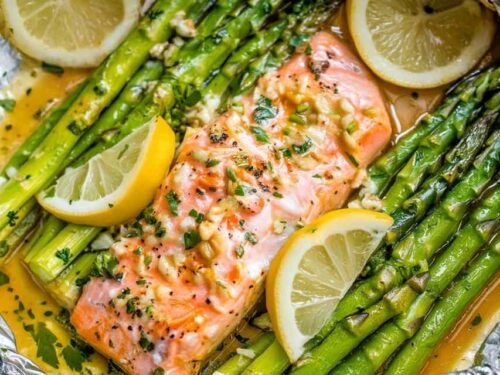
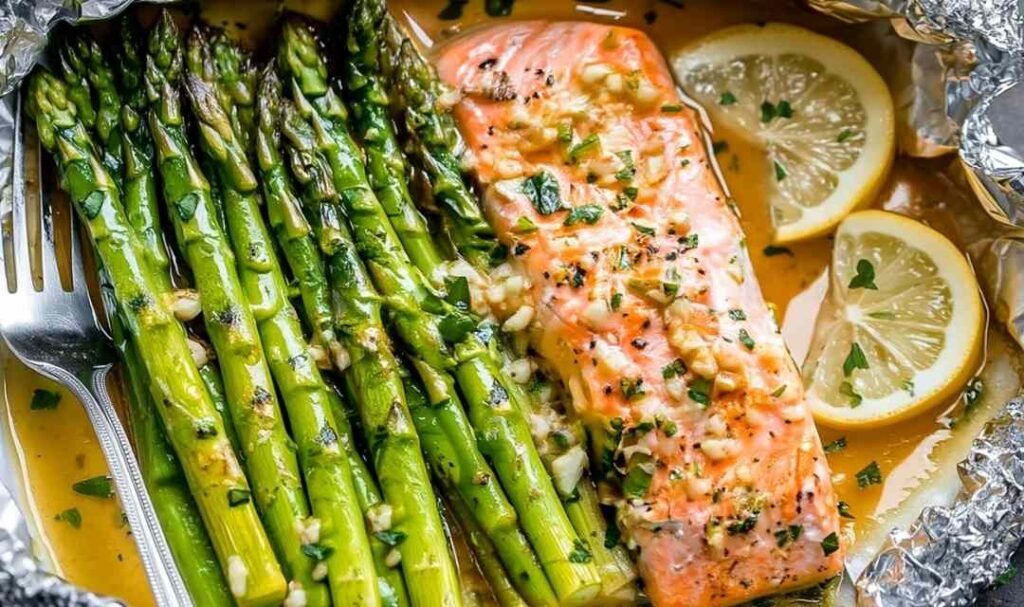
There’s something magical about a meal that cooks itself while you catch your breath after a long day. I discovered this baked salmon in foil with asparagus recipe during one of those weeks when I needed dinner on the table fast but refused to sacrifice flavor or nutrition. The first time I pulled these foil packets from the oven and unwrapped them, the buttery lemon aroma filled my kitchen, and I knew this would become a regular in my dinner rotation.
Table of Contents
Ingredients for Baked Salmon in Foil with Asparagus
I’ve tested this recipe dozens of times, and these specific ingredients create the perfect balance of flavors. The key is using fresh salmon fillets and not skipping the butter, it makes all the difference in creating that rich sauce. If you enjoy garlic butter salmon, you’ll love this foil packet variation.
- 1 pound (450g) salmon fillets (divided into 2 portions)
- 2 tablespoons vegetable broth or chicken broth
- 1 1/2 tablespoons fresh lemon juice (plus extra for serving) – I recommend using fresh, not bottled
- 1 tablespoon hot sauce (Sriracha works best) – My preference is to adjust this based on your heat tolerance
- 4 teaspoons minced garlic (about 4 cloves) – In my experience, fresh garlic beats jarred every time
- Salt to taste
- Fresh ground black pepper to taste
- 3 to 4 tablespoons butter (diced into small cubes, or use ghee for dairy-free) – I usually use 4 tablespoons for extra richness
- 2 tablespoons fresh chopped parsley or cilantro
- 1 pound (450g) medium-thick asparagus (woody ends trimmed) – Pro tip: bend each spear until it naturally snaps, that’s where the woody part ends
Step-by-Step Instructions
I recommend prepping all your ingredients before you start assembling the packets. This makes the process smooth and ensures you don’t forget any components.
Step 1: Preheat your oven to 425°F (220°C). Cut 2 sheets of heavy-duty aluminum foil, each measuring 14 by 12 inches, and lay them separately on your countertop. Trim the woody ends from your asparagus. In a small bowl, whisk together the broth, lemon juice, and hot sauce until combined.
Step 2: Pat the salmon fillets dry with paper towels, then season both sides generously with salt and pepper. Place one fillet in the center of each foil sheet. Arrange the trimmed asparagus spears alongside the salmon, laying them lengthwise along the foil. The asparagus should fit comfortably next to the fish without overcrowding.
Step 3: Sprinkle the minced garlic evenly over both the salmon and asparagus. Drizzle the broth mixture generously over everything, making sure to coat both the fish and vegetables. This liquid creates steam inside the packet and keeps everything moist.
Step 4: Distribute the butter cubes evenly between the two packets, placing them on top of the salmon and asparagus. As the butter melts, it will combine with the other liquids to create a delicious sauce.
Step 5: Bring the long sides of the foil up and fold them together, crimping tightly to seal. Then fold up the short ends, leaving a little space inside the packet for heat to circulate. You want it sealed but not vacuum-tight. Think of it like creating a little steam tent for your salmon.
Step 6: Place the foil packets on a rimmed baking sheet (this catches any drips) and transfer to the preheated oven. Bake for 12 minutes for perfectly cooked salmon. The fish should be opaque and flake easily with a fork when done. Thinner fillets may need only 10 minutes, while thicker cuts might need the full 12. This technique works similarly to how we prepare lemon dill baked cod, keeping the fish incredibly tender.
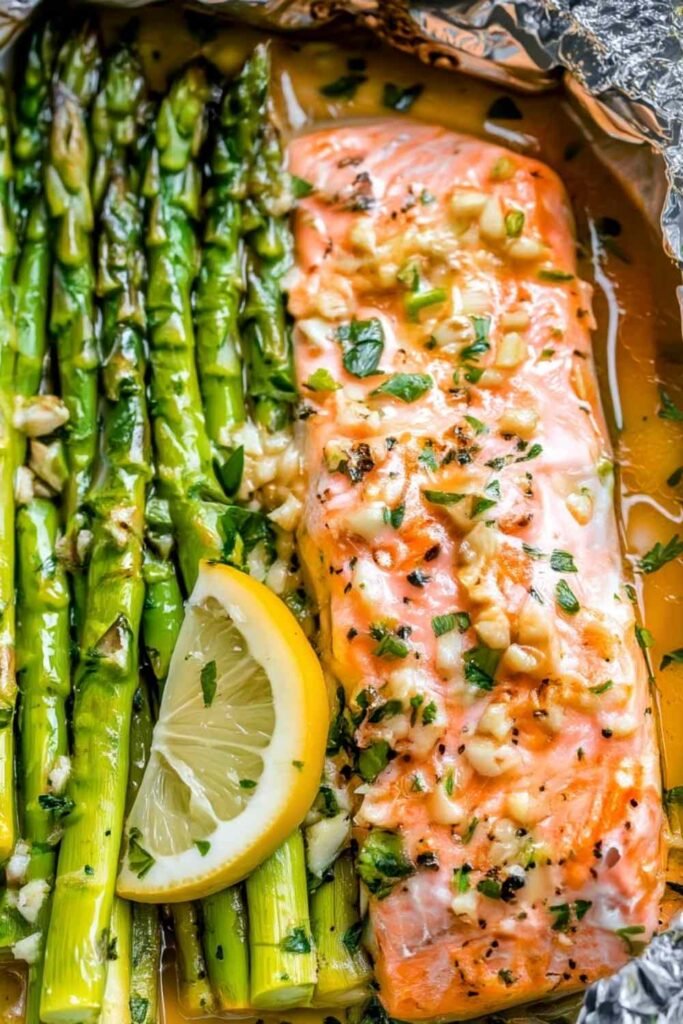
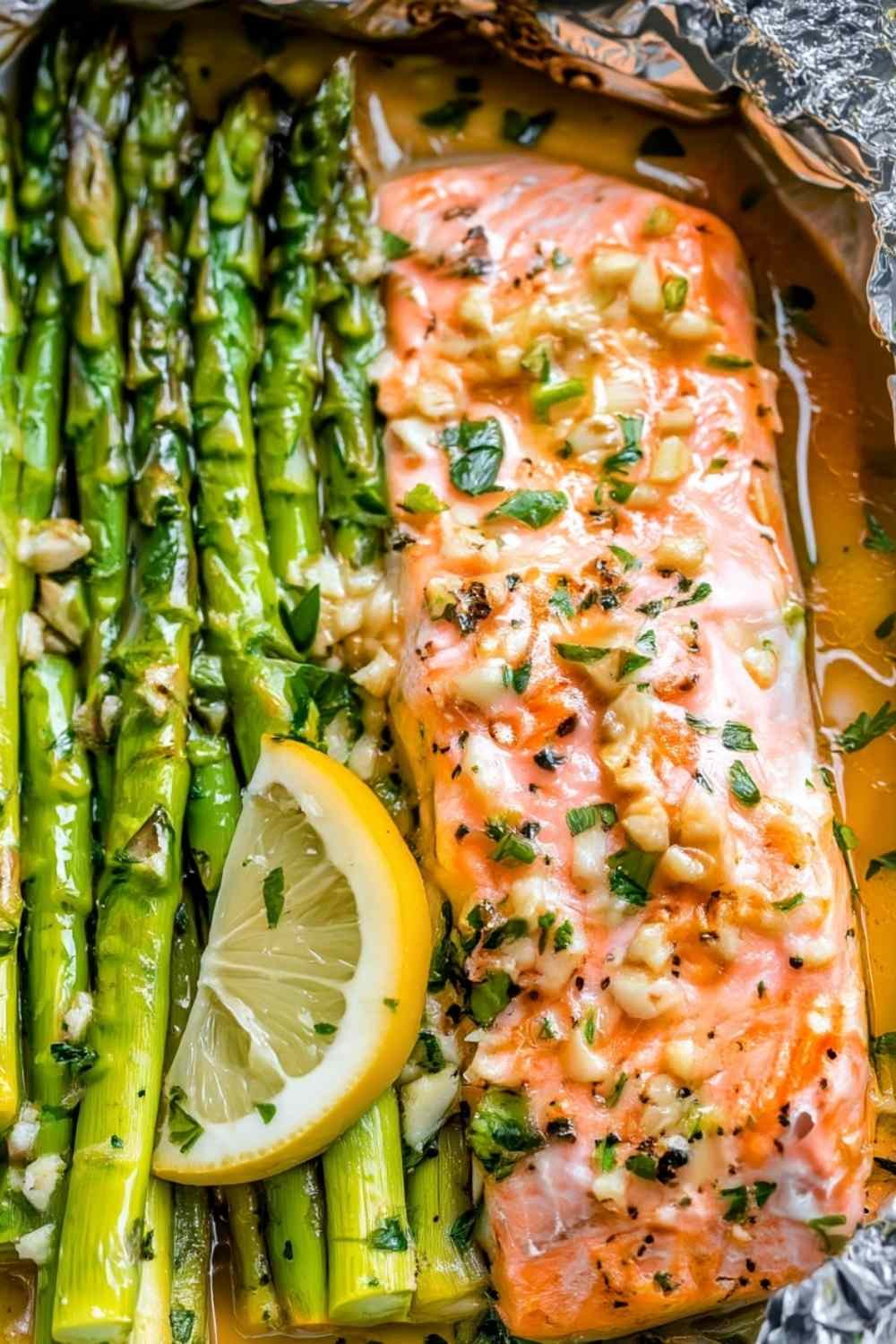
Step 7: Carefully open the packets (watch out for the steam, it’s hot). Drizzle with additional fresh lemon juice, garnish with chopped parsley or cilantro, and add a lemon slice if desired. Serve immediately while everything is piping hot.
Perfect Pairings for Baked Salmon
The beauty of this salmon dish is how well it pairs with simple sides that won’t overshadow the delicate lemon garlic flavors.
Cauliflower Rice: This low-carb option soaks up all that buttery sauce beautifully and keeps the meal light yet satisfying. The neutral flavor complements rather than competes with the salmon.
Roasted Potatoes: Try crispy roasted baby potatoes seasoned with herbs, or check out these cheesy ranch potatoes for a more indulgent side that pairs wonderfully with the lemony fish.
Fresh Green Salad: A crisp salad with lemon vinaigrette adds freshness and crunch. The acidity cuts through the richness of the butter sauce perfectly.
Wild Rice or Quinoa: For a heartier meal, try cooking wild rice similar to how it’s prepared in autumn wild rice soup, but serve it as a simple side. These whole grains add texture and make the dish more filling while absorbing the flavorful juices from the packet.
Mediterranean-Style Bowl: Transform your salmon into a complete bowl meal inspired by Mediterranean salmon bowls by adding cucumber, tomatoes, and feta cheese alongside your favorite grain.
Grilled Vegetables: Take inspiration from sheet pan garlic butter chicken and veggies and roast zucchini, bell peppers, and cherry tomatoes on a separate pan while your salmon bakes.
Crusty Bread: If you’re not following keto, a slice of warm sourdough or country bread is perfect for soaking up every last drop of that garlic butter sauce. The bread becomes part of the experience.
Storage and Serving Tips
Transfer any leftovers to an airtight container, discarding the foil. The salmon will keep in the refrigerator for 2 to 3 days. I recommend storing the salmon and asparagus together so the flavors continue to meld.
For reheating, use low heat to avoid overcooking the salmon. A 300°F oven for 8 to 10 minutes works well, or you can gently reheat in a covered skillet over medium-low heat. The microwave works in a pinch but watch it carefully, using 30-second intervals at 50% power.
This recipe is surprisingly versatile. You can swap the asparagus for broccolini, green beans, or sliced zucchini. For meal prep, assemble the packets in advance and refrigerate for up to 4 hours before baking. Just add 2 to 3 minutes to the cooking time if baking straight from the fridge. If you enjoy the bowl concept, try turning this into crispy salmon bowls by breaking up the cooked salmon over rice with fresh vegetables.
Frequently Asked Questions
Can I use frozen salmon for this recipe?
Yes, but make sure it’s completely thawed and patted very dry before seasoning. Excess moisture will dilute the sauce and affect the texture.
What if I don’t have heavy-duty foil?
You can double up regular foil or use parchment paper instead. Parchment creates a different effect but still steams the salmon beautifully.
How do I know when the salmon is done?
The salmon should reach an internal temperature of 145°F and appear opaque throughout. It should flake easily when tested with a fork but still be moist inside.
Creamy Spinach Turkey Meatballs
Ingredients
Equipment
Method
- In a large bowl, combine ground turkey and ground chicken, shredded cheese, grated garlic, Italian seasoning, bouillon cube, red chili pepper flakes, half the chopped cilantro or parsley, and black pepper. Mix gently with your hands until just combined, being careful not to overwork the mixture. Form into medium-sized balls about 1.5 inches in diameter (you should get 16-18 meatballs). Arrange the turkey meatballs on a plate and set aside.
- Heat olive oil in a 12-inch skillet over medium-low heat. Add the meatballs in a single layer without crowding (work in batches if needed). Cook for 8 to 10 minutes, turning occasionally, until golden brown on all sides and cooked through to 165°F internally. The key is medium heat so the outside doesn’t burn while the inside stays raw. Remove to a clean plate and set aside.
- In the same skillet with the remaining cooking juices, melt butter over medium heat. Add the minced garlic and cook for about one minute until fragrant but not browned. Stir in the diced onion and cook until translucent, about 3 to 4 minutes. Add the drained sun-dried tomatoes and fry for 1 to 2 minutes. Pour in the vegetable broth and let it reduce for about one minute (liquid should reduce by about one-third).
- Lower the heat and pour in the heavy cream, stirring gently. Bring the sauce to a gentle simmer and season with salt and pepper to taste. Add the baby spinach and stir until wilted. Sprinkle in the Parmesan cheese and let the sauce simmer for another minute until the cheese melts and the sauce thickens slightly and coats the back of a spoon.
- Return the cooked meatballs to the pan and spoon the creamy sauce over each one. Garnish with the remaining fresh parsley and serve immediately over cauliflower rice for keto or pasta for traditional serving.