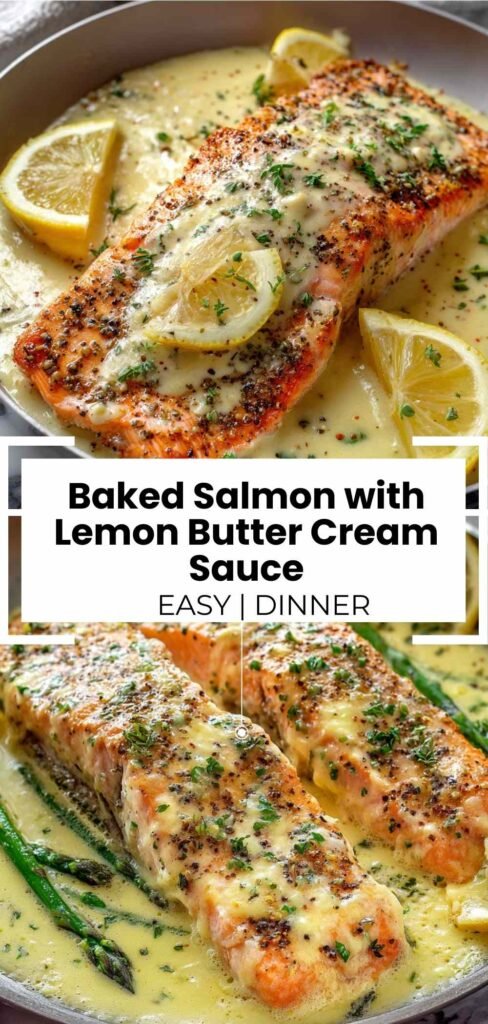


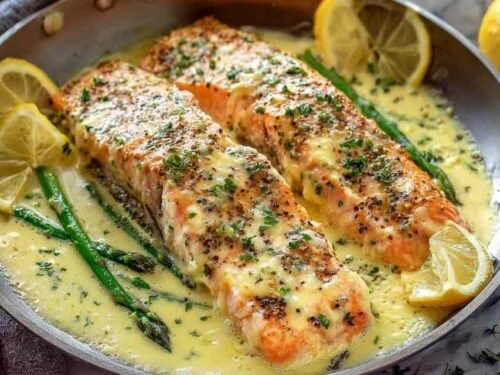
This Baked Salmon with Lemon Butter Cream Sauce delivers restaurant-quality results with minimal kitchen time. I stumbled onto this recipe during a particularly hectic week when I needed something impressive for guests but only had 30 minutes to spare. The combination of tender, flaky salmon with a rich, garlicky cream sauce became an instant family favorite. What I love most is how the bright lemon cuts through the butter’s richness without overwhelming the delicate fish. If you’ve ever worried about overcooking salmon or thought cream sauces were too fussy, this straightforward method will change your mind.
Table of Contents
Ingredients for Baked Salmon with Lemon Butter Cream Sauce
I’ve made this recipe dozens of times, and the ingredient quality really matters here. Fresh lemon juice makes a noticeable difference over bottled, and I always reach for wild-caught salmon when possible for better flavor and texture. The Dijon mustard might seem like an odd addition, but it adds a subtle tang that balances the richness beautifully.
For The Salmon:
- 2 tablespoons freshly squeezed lemon juice (I recommend using fresh lemons, not bottled)
- 1 tablespoon olive oil
- 1 garlic clove, minced
- 2 tablespoons old-style Dijon mustard
- 5 skinless salmon fillets, about 5 oz (150 grams) each (pat these dry before seasoning)
- ½ teaspoon ground black pepper
- Salt, to taste (I usually use about ¼ teaspoon per fillet)
Lemon Butter Garlic Sauce:
- ¼ cup unsalted butter (my preference is European-style for richer flavor)
- 1 ½ tablespoons minced garlic cloves (about 4-5 cloves)
- ½ cup heavy cream or half and half (heavy cream creates a thicker sauce)
- 1 to 2 tablespoons freshly squeezed lemon juice, optional (I always add this for brightness)
- 1 tablespoon fresh parsley, finely chopped
- ½ teaspoon ground black pepper
- Lemon slices for serving
Step-by-Step Instructions
In my experience, the key to perfect baked salmon is getting your oven properly preheated and not walking away during baking. I recommend setting a timer for 10 minutes, then checking every 2 minutes after that.
Step 1: Preheat your oven to 425°F (220°C) with the rack positioned in the center. This high temperature creates a slightly caramelized exterior while keeping the interior moist.
Step 2: In a medium bowl, whisk together 2 tablespoons lemon juice, 1 tablespoon olive oil, 1 minced garlic clove, and 2 tablespoons Dijon mustard until smooth and emulsified. This marinade works double duty as both flavor enhancer and moisture barrier.
Step 3: Pat salmon fillets completely dry with paper towels (this helps the marinade adhere). Place fillets in an oven-safe skillet, pour the marinade over top, and rub gently to coat all surfaces. Season with ½ teaspoon black pepper and salt to taste. Transfer immediately to preheated oven and bake for 10 to 15 minutes depending on thickness.
Step 4: While salmon bakes, start your sauce. Melt ¼ cup butter in a medium saucepan over low-medium heat. Add 1 ½ tablespoons minced garlic and sauté until fragrant and slightly golden, about 30 to 45 seconds. Watch carefully as garlic can burn quickly.
Step 5: Pour in ½ cup heavy cream and bring to a gentle boil, stirring occasionally. The sauce will thicken slightly as it reduces, taking about 2 to 3 minutes. You’ll know it’s ready when it coats the back of a spoon.
Step 6: Remove sauce from heat and stir in 1 to 2 tablespoons lemon juice if using (I highly recommend it). Add 1 tablespoon chopped parsley and season with ½ teaspoon black pepper and salt to your liking. The sauce should taste bright and balanced, not heavy.
Step 7: Check salmon for doneness by gently pressing the top with a fork. It should flake easily but still look slightly translucent in the very center (it will finish cooking as it rests). Remove from oven and let rest 5 minutes before serving. Pour warm sauce over salmon and garnish with lemon slices.
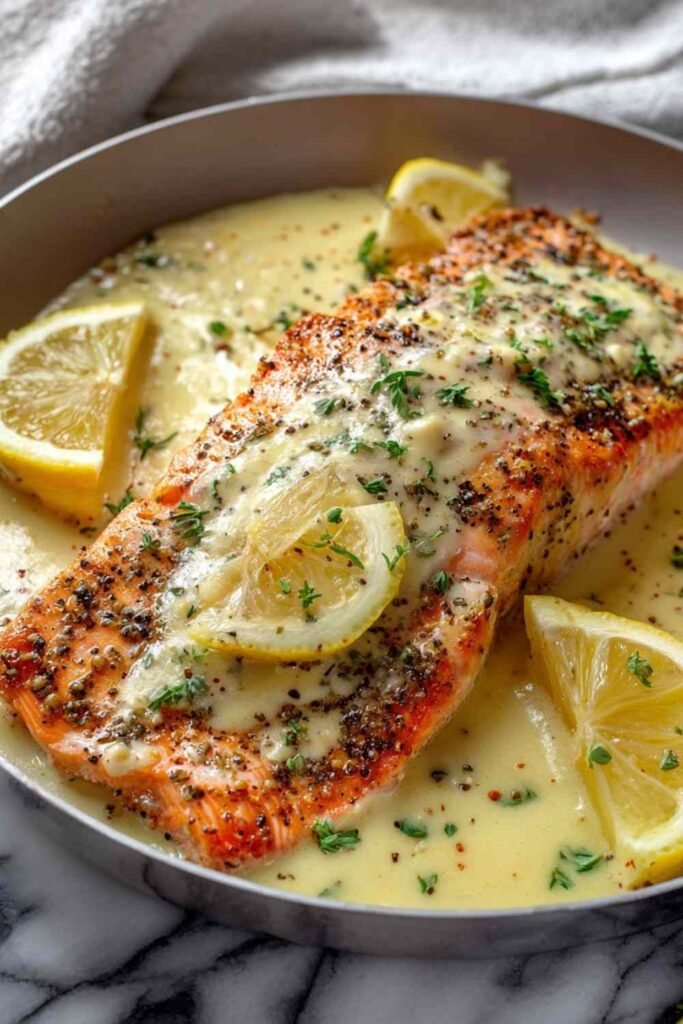
Perfect Pairings for Baked Salmon with Lemon Butter Cream Sauce
This rich, creamy salmon pairs beautifully with sides that offer texture contrast and help balance the richness of the butter sauce.
Garlic Mashed Potatoes: Creamy, buttery mashed potatoes soak up every drop of that lemon butter sauce. The garlic echoes the flavors in the dish without overwhelming. For a similar comforting combination, try my Garlic Herb Chicken with Mashed Potatoes which uses the same pairing concept.
Roasted Asparagus or Green Beans: The slight char and crisp-tender texture of roasted vegetables cuts through the cream sauce perfectly. A simple olive oil, salt, and pepper treatment is all you need. Check out my Sheet Pan Garlic Butter Chicken and Veggies for more veggie roasting inspiration.
Cilantro Lime Rice: The bright, herbaceous notes complement the lemon in the sauce while adding a satisfying base. This pairing is similar to my Cilantro Lime Steak Bowls which uses the same rice technique.
Simple Arugula Salad: Peppery arugula dressed with lemon vinaigrette provides a fresh, palate-cleansing contrast. The slight bitterness balances the rich sauce beautifully.
Buttered Egg Noodles: Wide egg noodles tossed with butter and parsley create the ultimate comfort food pairing. They catch the sauce perfectly. My Chicken with Buttered Noodles uses this same simple but effective side.
Crusty Garlic Bread: Essential for soaking up every last bit of that incredible lemon butter sauce. Toast thick slices and rub with raw garlic for extra punch.
How to Store and Reheat Leftovers
Store leftover salmon in an airtight container in the refrigerator for up to 3 days. I recommend keeping the sauce separate if possible, as it reheats more evenly that way. The cream sauce can be refrigerated in a sealed container for up to 3 days as well.
For reheating, I prefer using the oven at 275°F for about 10 minutes, covered with foil to prevent drying out. The microwave works in a pinch, use 50% power in 30-second intervals. Add a splash of cream or water to the sauce before reheating to restore its silky texture.
Freezing is not recommended for this recipe. The cream sauce tends to separate and become grainy when frozen and thawed, and previously frozen salmon loses its delicate, flaky texture. This is definitely a recipe best enjoyed fresh or within a few days of cooking.
FAQs
Can I use salmon with skin on?
Yes, just place the fillets skin-side down in the skillet. The skin will help protect the fish from drying out. You can remove it after baking if preferred.
What if I don’t have heavy cream?
Half and half works well and creates a lighter sauce. You can also use whole milk thickened with 1 tablespoon of flour whisked in, though the texture won’t be quite as luxurious.
How do I know when the salmon is perfectly cooked?
The salmon should flake easily with a fork and register 145°F on an instant-read thermometer. It’s better to slightly undercook than overcook, as it continues cooking while resting.
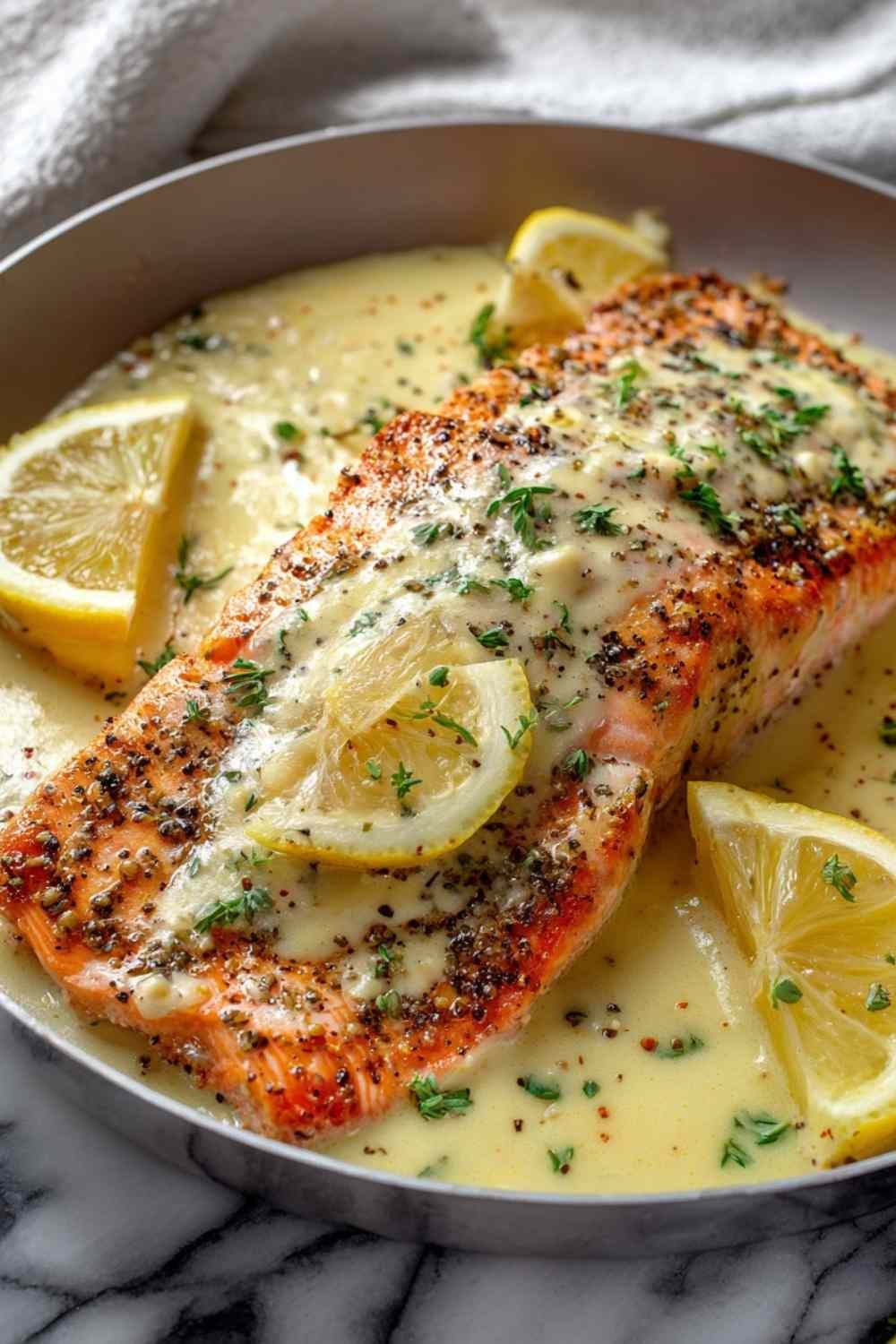
Baked Salmon with Lemon Butter Cream Sauce
Ingredients
Equipment
Method
- Preheat your oven to 425°F (220°C) with the rack positioned in the center.
- In a medium bowl, whisk together 2 tablespoons lemon juice, 1 tablespoon olive oil, 1 minced garlic clove, and 2 tablespoons Dijon mustard until smooth.
- Pat salmon fillets dry with paper towels. Place fillets in an oven-safe skillet, pour marinade over top, and rub to coat. Season with ½ teaspoon black pepper and salt to taste. Bake for 10-15 minutes depending on thickness.
- While salmon bakes, melt ¼ cup butter in a medium saucepan over low-medium heat. Add 1 ½ tablespoons minced garlic and sauté until fragrant, about 30-45 seconds.
- Pour in ½ cup heavy cream and bring to a gentle boil, stirring occasionally. Cook for 2-3 minutes until sauce thickens slightly.
- Remove sauce from heat and stir in 1-2 tablespoons lemon juice if using. Add 1 tablespoon parsley and season with ½ teaspoon black pepper and salt to taste.
- Remove salmon from oven and let rest 5 minutes. Pour warm sauce over salmon and serve with lemon slices.
Notes