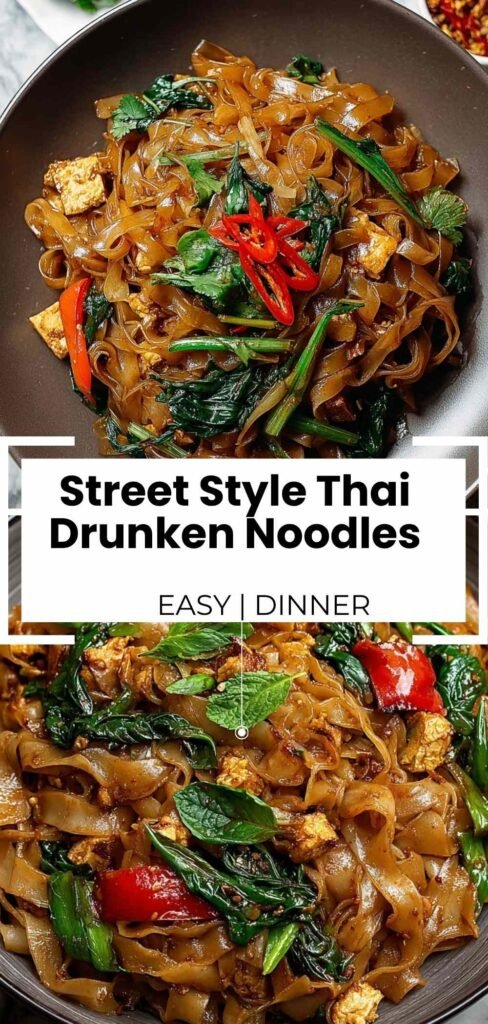


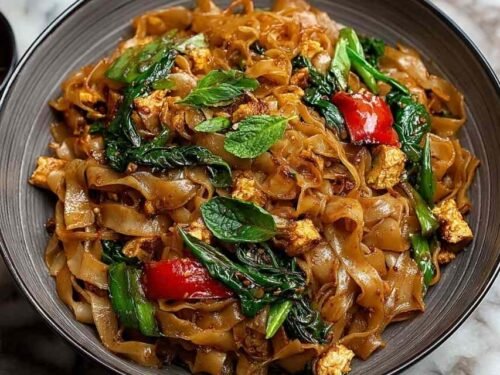
Ever crave bold Thai restaurant flavors on a busy Tuesday night? This Street Style Thai Drunken Noodles recipe brings those savory, sweet, and slightly spicy notes right to your kitchen. I discovered this Americanized version back in 2019 when my local Thai place closed early, and I had a craving I just couldn’t shake. After a few attempts (and one batch of seriously mushy noodles), I nailed down this foolproof method that delivers incredible flavor without hunting down specialty ingredients.
Table of Contents
Ingredients for Street Style Thai Drunken Noodles
Getting your prep work done before you start cooking makes this recipe flow smoothly. I always measure and chop everything first since stir-frying moves fast once that wok heats up. My go-to brand for wide rice noodles is any Thai import brand from the Asian aisle since they hold their texture better and don’t turn mushy as quickly as generic brands.
- 8 oz wide flat rice noodles (sen yai or ho fun, not the thinner pad Thai style)
- 2 tbsp vegetable oil (I prefer peanut oil for authentic flavor and higher smoke point)
- 4 cloves garlic (minced finely)
- 8 oz boneless chicken breast or shrimp (cut into 1-inch pieces for even cooking) – In my experience, chicken thighs deliver better flavor and stay juicier
- 1 cup bell peppers (sliced thin, any color combination works)
- 1 cup broccoli florets (cut small and bite-sized for quick cooking)
- 1 cup carrots (julienned or cut into thin matchstick strips)
- 3 tbsp low-sodium soy sauce – I usually add an extra splash for deeper color and saltiness
- 1 tbsp brown sugar (balances the savory elements beautifully)
- 1/2 tsp red pepper flakes (optional, for heat) – Pro tip: add more if you like genuine spice
- 2 tbsp water or chicken broth (for loosening sauce if needed)
Step-by-Step Instructions
I recommend chopping all your vegetables and measuring your sauces before heating your pan. In my experience, having everything within arm’s reach prevents that frantic scrambling when cooking over high heat.
Step 1: Bring a large pot of water to a rolling boil. Add your wide rice noodles and cook according to package directions until just al dente (they should have a slight chew, not be completely soft), typically 5-7 minutes. Drain immediately and rinse briefly with cool water to stop the cooking process. Toss with a small drizzle of oil to prevent sticking while you cook everything else. Don’t skip this step or you’ll end up with a clumped noodle brick.
Step 2: Heat your vegetable or peanut oil in a large skillet or wok over medium-high heat until it shimmers and moves easily across the pan (about 375-400°F if using an electric stove). Add the minced garlic and stir constantly for 30-60 seconds until fragrant and just starting to turn golden. Watch this carefully since garlic burns quickly and turns bitter if left too long.
Step 3: Add your protein to the hot pan and spread it out in a single layer without overcrowding. Let it cook undisturbed for about 2 minutes to develop a nice golden sear on one side, then stir-fry for another 3-5 minutes for chicken (until internal temperature reaches 165°F) or 2-3 minutes for shrimp (until pink and opaque throughout). Common mistake to avoid: moving the protein too much prevents proper browning.
Step 4: Toss in the bell peppers, broccoli, and carrots. Stir-fry for 2-3 minutes until the vegetables are tender-crisp and still have a slight crunch. They should be bright in color and barely softened. If your pan seems too dry, add a tablespoon of water to create some steam.
Step 5: Add the cooked noodles back to the skillet along with soy sauce, brown sugar, and red pepper flakes if using. Using tongs or two spatulas, toss everything together for 2-3 minutes until the noodles are heated through, well-coated with sauce, and have a glossy sheen. If the mixture seems dry, add a splash of water or broth to loosen things up. The sugar should melt completely and create that signature sticky-savory coating.

Perfect Pairings for Thai Drunken Noodles
These noodles pack plenty of flavor and substance on their own, but the right sides transform this into a complete Thai-inspired spread that balances textures and temperatures beautifully.
Fresh Spring Rolls: Light and refreshing rice paper rolls filled with crisp vegetables and herbs provide a cooling contrast to the warm, savory noodles. The delicate texture and bright flavors offer the perfect palate cleanser between bites of rich, saucy noodles.
Thai Cucumber Salad: This tangy, slightly sweet side cuts through the richness beautifully. Cool, crunchy cucumbers dressed in rice vinegar with a sprinkle of sesame seeds and a touch of sugar create a refreshing counterpoint that keeps each bite of noodles tasting fresh.
Jasmine Rice: If you want to stretch this meal further or tone down the intensity, fluffy steamed jasmine rice works as a neutral base. Its subtle floral aroma complements without competing, and it soaks up any extra sauce left in your bowl. Similar to how rice rounds out our garlic cream chicken skillet, it adds satisfying substance.
Crispy Vegetable Egg Rolls: For special occasions or extra-hungry nights, golden-brown egg rolls add satisfying crunch and make the meal feel restaurant-special. They’re perfect for using up extra vegetables and give you something fun to dip in sweet chili sauce.
Asian Slaw with Peanut Dressing: Crunchy cabbage and carrots tossed in creamy peanut dressing provide both nutritional balance and textural variety. The cool, crisp slaw contrasts beautifully with hot noodles and adds extra vegetables to round out your dinner.
Keeping Your Noodles Fresh
Store any leftover Thai Drunken Noodles in an airtight container in the refrigerator for up to 3 days. I recommend combining the noodles and vegetables together since they’ll maintain better texture as one dish. Fair warning: the noodles will soften and lose some of that ideal chewy texture after storage, though the flavor stays delicious.
For reheating, skip the microwave if possible since it makes noodles gummy and unevenly heated. Instead, place the noodles in a large skillet over medium heat with 2-3 tablespoons of water or chicken broth. Stir frequently for 5-7 minutes until heated through and steaming. The added liquid helps revive the noodles and prevents them from drying out. Pro tip: a quick blast of high heat at the end (30 seconds) can restore some of that wok-charred flavor.
These noodles work great for meal prep if you plan strategically. Prep all your vegetables and protein in advance, storing them separately in the fridge for up to 2 days. Keep the sauce mixture ready in a small jar. When dinner time rolls around, everything comes together in 15 minutes flat, making hectic weeknight cooking feel manageable.
FAQs
Can I make Thai Drunken Noodles vegetarian or vegan?
Absolutely! Swap the chicken or shrimp for extra-firm tofu (pressed and cubed) or your favorite plant-based protein. Add mushrooms (shiitake or oyster varieties work best) for meaty texture and that savory umami depth. Just make sure your soy sauce is tamari if you need gluten-free.
Why are they called drunken noodles if there’s no alcohol in the recipe?
Despite the name, traditional drunken noodles contain no alcohol. The name likely comes from these being a popular late-night dish in Thailand, often enjoyed after social gatherings. Some theories suggest the intense flavors help with hangovers, though that’s never been proven.
My noodles turned mushy and clumped together. What went wrong?
This usually happens from overcooking the noodles initially or not rinsing them after boiling. Cook noodles only until al dente (slightly firm), rinse to stop cooking, and toss with a bit of oil immediately. Also, make sure your pan is hot enough when stir-frying since low heat steams noodles instead of searing them.
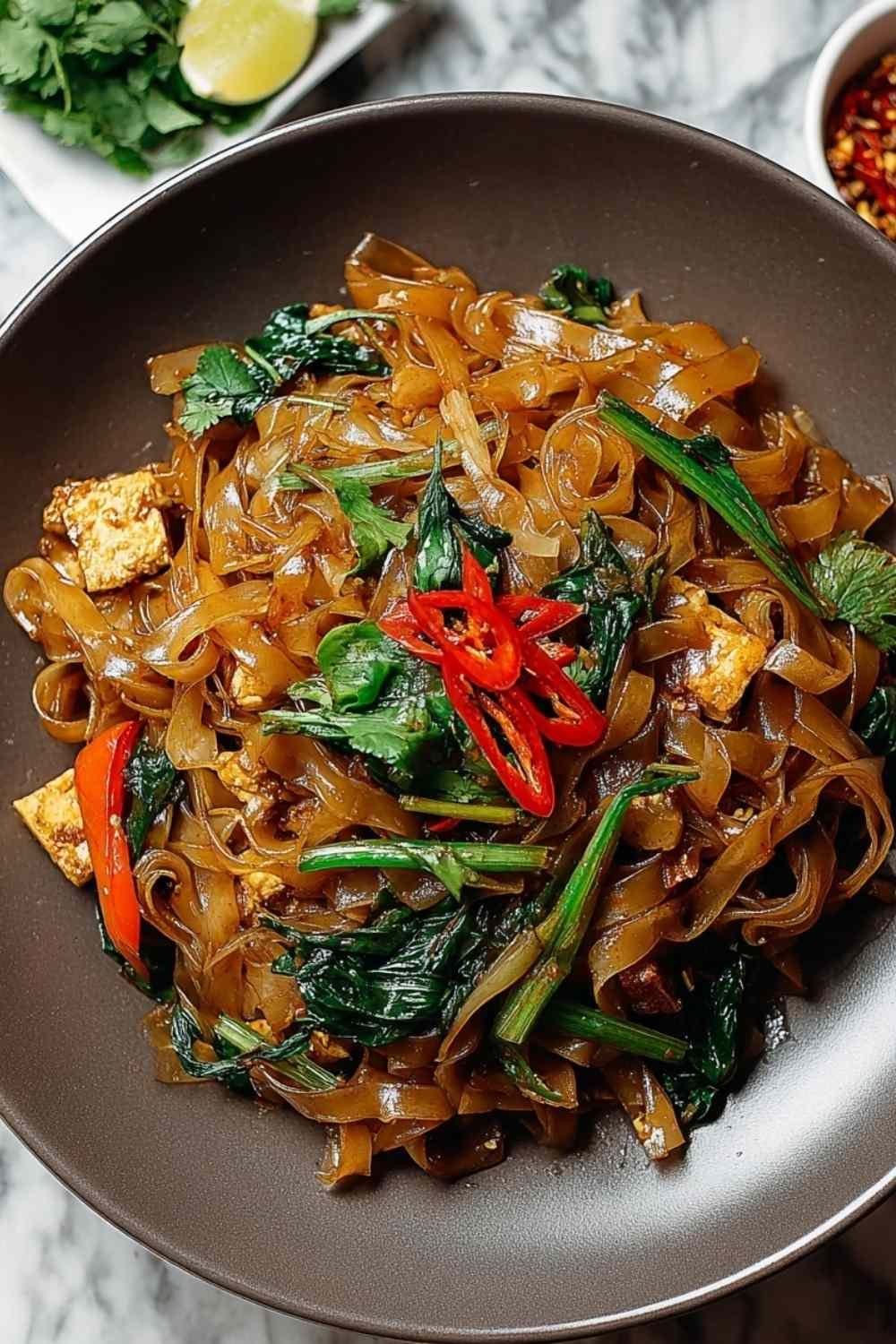
Street Style Thai Drunken Noodles
Ingredients
Equipment
Method
- Bring a large pot of water to a rolling boil. Add wide rice noodles and cook according to package directions until just al dente with a slight chew, typically 5-7 minutes. Drain immediately and rinse briefly with cool water to stop cooking. Toss with a small drizzle of oil to prevent sticking.
- Heat vegetable or peanut oil in a large skillet or wok over medium-high heat until shimmering (about 375-400°F). Add minced garlic and stir constantly for 30-60 seconds until fragrant and just starting to turn golden. Watch carefully to prevent burning.
- Add protein to the hot pan and spread in a single layer. Let cook undisturbed for 2 minutes to develop a sear, then stir-fry for 3-5 minutes for chicken (until internal temperature reaches 165°F) or 2-3 minutes for shrimp (until pink and opaque).
- Toss in bell peppers, broccoli, and carrots. Stir-fry for 2-3 minutes until vegetables are tender-crisp with a slight crunch and bright color. Add a tablespoon of water if pan seems too dry.
- Add cooked noodles, soy sauce, brown sugar, and red pepper flakes if using to the skillet. Using tongs or spatulas, toss everything together for 2-3 minutes until noodles are heated through, well-coated with sauce, and have a glossy sheen. Add a splash of water or broth if mixture seems dry.
Notes