


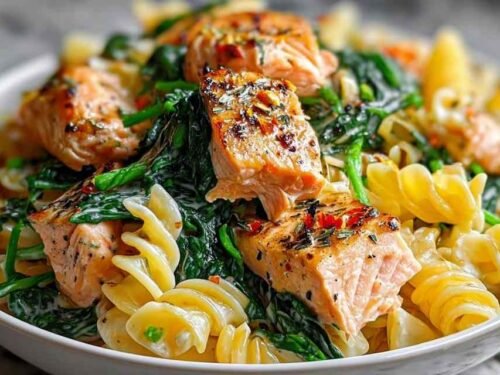
Last Tuesday after a particularly exhausting work day, I stood in my kitchen staring at a salmon fillet and wondering if I had the energy to make something special. That’s when I threw together this creamy salmon spinach pasta, and honestly, it surprised even me. The tender salmon, vibrant spinach, and silky garlic Parmesan sauce came together so quickly that I had dinner on the table before my family finished setting it.
Table of Contents
Ingredients for Salmon Spinach Pasta
I’ve tested this recipe more times than I can count, tweaking proportions until everything balanced just right. The fresh salmon makes a real difference compared to frozen, though frozen works if you thaw it completely and pat it very dry. Here’s what you’ll need:
- 8 ounces fettuccine or linguine
- 2 tablespoons olive oil
- 2 cloves garlic (minced) – I recommend using fresh garlic instead of jarred because it gives you that sharp, aromatic punch
- 1 pound fresh salmon fillet (skin removed)
- 4 cups fresh spinach (washed and roughly chopped) – In my experience, fresh baby spinach works better than frozen since it wilts without releasing excess water
- 1 cup heavy cream
- 1/2 cup grated Parmesan cheese – My preference is always freshly grated from a block rather than pre-shredded for smoother melting
- 1 teaspoon lemon zest
- 2 tablespoons fresh lemon juice
- Salt and pepper to taste
- 1/4 teaspoon red pepper flakes (optional) – I usually add these for a gentle warmth that doesn’t overpower
- Fresh parsley (chopped, for garnish)
Step-by-Step Instructions
I recommend reading through all the steps once before you start cooking so you can work efficiently and have everything ready when you need it.
Step 1: Bring a large pot of salted water (about 1-2 tablespoons salt) to a rolling boil. Add the pasta and cook for 8-10 minutes, stirring occasionally, until al dente with a slight firmness when you bite into it. Just before draining, scoop out 1 cup of the starchy pasta cooking water and set it aside – this liquid gold helps thin the sauce later while adding silky body. Drain the pasta in a colander and toss with a drizzle of olive oil to prevent clumping.
Step 2: Pat the salmon fillet completely dry with paper towels, then season both sides generously with salt, pepper, and a light sprinkle of lemon juice. Heat 2 tablespoons olive oil in a large skillet over medium heat until it shimmers and flows easily across the pan. Gently place the salmon flesh-side down and cook undisturbed for 4-5 minutes until you see a golden crust forming around the edges. Flip carefully and cook another 4-5 minutes until the internal temperature reaches 145°F and the fish flakes easily with a fork. Remove to a clean plate, let it rest for 2 minutes, then use a fork to break it into generous bite-sized chunks.
Step 3: Don’t wipe out that skillet – those browned bits stuck to the bottom are packed with flavor. Add the minced garlic to the same pan and sauté for about 30 seconds, stirring constantly, until it smells fragrant but hasn’t turned brown. Immediately add the chopped spinach and cook for 2-3 minutes, stirring frequently, until the leaves shrink down completely and turn bright green with no raw-looking pieces remaining.
Step 4: Lower the heat to medium-low and pour in the heavy cream, using a wooden spoon to scrape up any flavorful bits from the pan bottom. Let it warm through for about a minute. Now gradually sprinkle in the Parmesan cheese while stirring constantly in a figure-eight pattern until every bit melts into a smooth, velvety sauce that lightly coats the back of your spoon without being too thick.
Step 5: Stir in the lemon zest, fresh lemon juice, and red pepper flakes if you’re using them. Let the sauce bubble gently for 2-3 minutes so all the flavors can mingle and deepen. Taste it now and adjust the seasoning with more salt and pepper – the sauce should taste bright, creamy, and well-balanced. Add the drained pasta directly to the skillet and use tongs to toss everything together, making sure every strand gets coated. Gently fold in the flaked salmon, keeping some larger chunks intact for a prettier presentation. If the sauce looks too thick or clings too heavily, add the reserved pasta water one tablespoon at a time, tossing between additions, until you reach a consistency that flows but still clings nicely to the noodles.
Step 6: Transfer to warm serving bowls or plates immediately. Garnish with a generous sprinkle of fresh chopped parsley and extra Parmesan if you like.
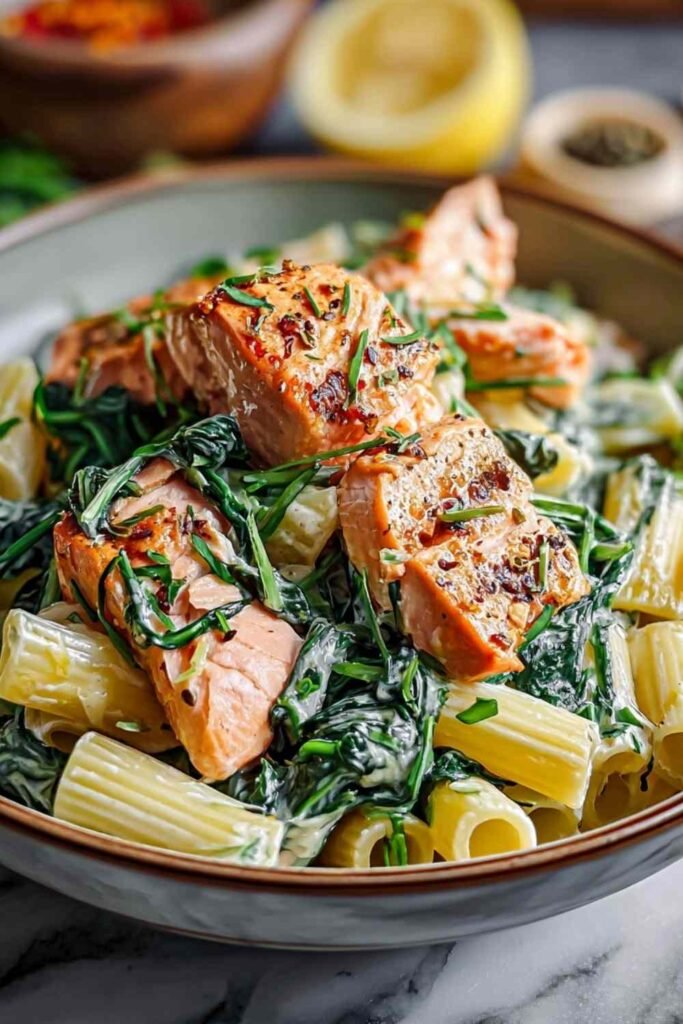
Perfect Pairings for Salmon Spinach Pasta
The rich, creamy nature of this pasta works beautifully alongside lighter sides that provide textural contrast and bright flavors.
Garlic Bread: Those crispy, buttery edges are perfect for soaking up every last drop of the luscious cream sauce, and the garlic flavor echoes what’s already in the dish without overwhelming it.
Caesar Salad: The tangy, anchovy-kissed dressing and crisp romaine lettuce cut through the richness of the cream sauce while adding refreshing crunch and acidity that cleanses your palate between bites.
Roasted Asparagus: These tender green spears with lightly caramelized tips bring elegant restaurant vibes to your table while adding extra vegetables and a slightly sweet, earthy flavor that complements the salmon beautifully. Try pairing with something like our sheet pan sausage and veggies for inspiration on roasting techniques.
Steamed Green Beans with Lemon: Keep it simple with tender-crisp green beans tossed with lemon juice, butter, and a pinch of salt – they echo the citrus notes in the pasta while adding crunch and freshness without competing for attention.
Arugula Salad: The peppery bite of fresh arugula dressed simply with good balsamic vinegar and olive oil provides a sophisticated, refreshing counterpoint that cuts through the cream and balances every forkful.
If you enjoy creamy pasta dishes, you might also love our creamy garlic parmesan chicken pasta which uses similar flavor profiles but with chicken instead of salmon.
Storage & Serving Tips
Store any leftovers in an airtight container in the refrigerator for up to 2 days. The cream sauce will thicken as it sits, which is completely normal. If you’re planning to have leftovers, consider keeping some of the flaked salmon separate before mixing it in – it reheats more successfully that way and stays tender.
When you’re ready to reheat, warm the pasta gently in a skillet over low heat with a splash of heavy cream, milk, or even some of that reserved pasta water to bring the sauce back to life. Avoid microwaving at high power because it can make the salmon rubbery and cause the cream sauce to separate into an oily mess. Low and slow wins here.
This pasta is incredibly adaptable – try stirring in halved cherry tomatoes during summer months, add roasted red peppers for extra sweetness, or swap the salmon for grilled chicken thighs if that’s what you have on hand. For another easy weeknight pasta option, check out our creamy Italian sausage rigatoni. It even works as a cold pasta salad the next day with an extra squeeze of lemon juice and some fresh herbs.
FAQs
Can I use frozen salmon for this recipe?
Yes, just make sure to thaw it completely in the refrigerator overnight. Pat it extremely dry with paper towels before cooking to get a nice golden sear and prevent excess moisture from watering down your sauce.
What if I don’t have heavy cream?
You can substitute with half-and-half mixed with 2 tablespoons of cream cheese for similar richness, or use full-fat coconut milk for a dairy-free version, though the flavor will be noticeably different and slightly sweet.
How do I prevent the sauce from breaking or looking grainy?
Keep your heat on low once you add the cream, and never let it come to a rolling boil. Add the Parmesan gradually while stirring constantly, and make sure you’re using freshly grated cheese rather than pre-shredded, which contains anti-caking agents that prevent smooth melting.
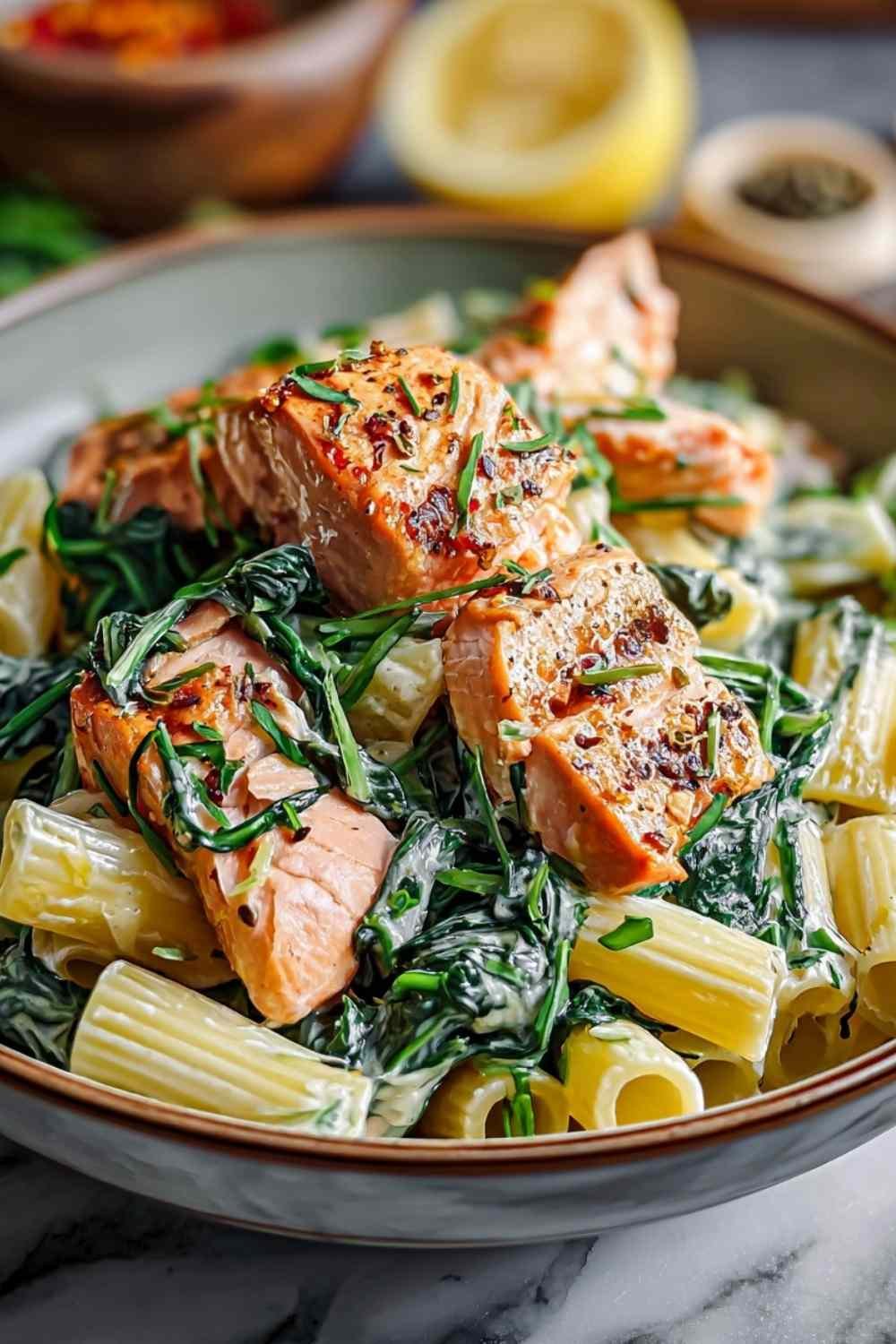
Salmon Spinach Pasta
Ingredients
Equipment
Method
- Bring a large pot of salted water (1 to 2 tablespoons salt) to a rolling boil. Add the pasta and cook for 8-10 minutes, stirring occasionally, until al dente with a slight firmness when you bite into it. Before draining, scoop out 1 cup of the starchy pasta cooking water and set aside. Drain pasta in a colander and toss with a drizzle of olive oil to prevent clumping.
- Pat salmon fillet completely dry with paper towels, then season both sides generously with salt, pepper, and a light sprinkle of lemon juice. Heat 2 tablespoons olive oil in a large skillet over medium heat until it shimmers. Place salmon flesh-side down and cook undisturbed for 4-5 minutes until a golden crust forms. Flip carefully and cook another 4-5 minutes until internal temperature reaches 145°F and fish flakes easily. Remove to a plate, let rest for 2 minutes, then flake into bite-sized chunks.
- In the same skillet (don’t wipe it out), add minced garlic and sauté for 30 seconds, stirring constantly, until fragrant but not browned. Immediately add chopped spinach and cook for 2-3 minutes, stirring frequently, until completely wilted and bright green.
- Lower heat to medium-low and pour in heavy cream, using a wooden spoon to scrape up flavorful bits from pan bottom. Let warm through for about 1 minute. Gradually sprinkle in Parmesan cheese while stirring constantly in a figure-eight pattern until completely melted into a smooth, velvety sauce that lightly coats the back of your spoon.
- Stir in lemon zest, fresh lemon juice, and red pepper flakes if using. Let sauce bubble gently for 2-3 minutes. Taste and adjust seasoning with more salt and pepper as needed.
- Add drained pasta directly to skillet and use tongs to toss everything together until every strand is coated. Gently fold in flaked salmon, keeping some larger chunks intact for presentation. If sauce looks too thick, add reserved pasta water one tablespoon at a time, tossing between additions, until it flows but still clings nicely to noodles.
- Transfer to warm serving bowls or plates immediately. Garnish with fresh chopped parsley and extra Parmesan if desired. Serve right away.