



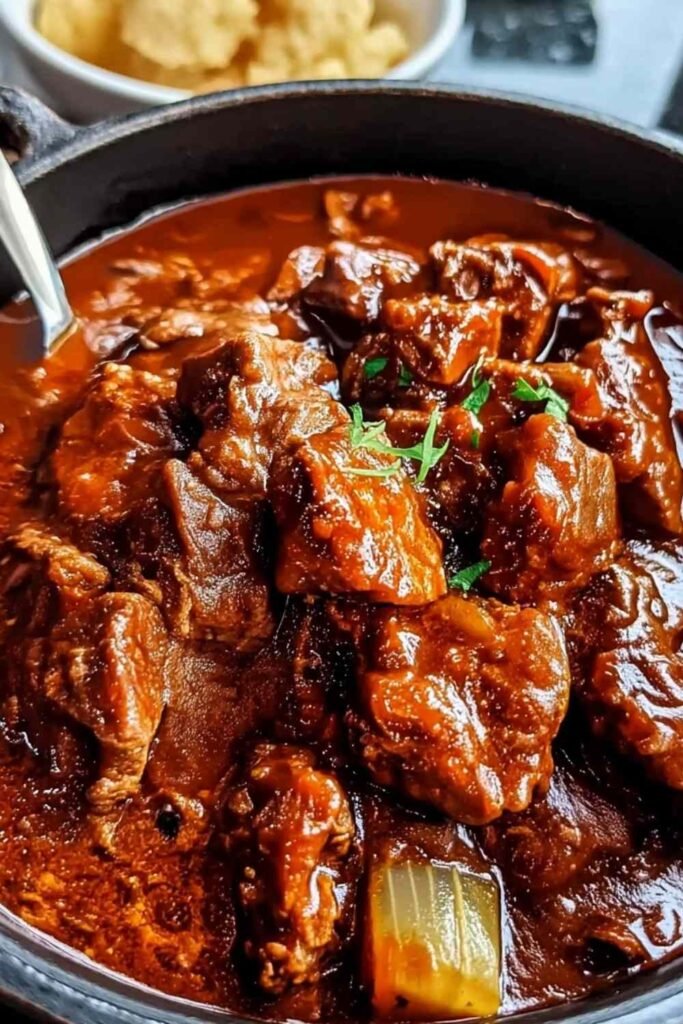
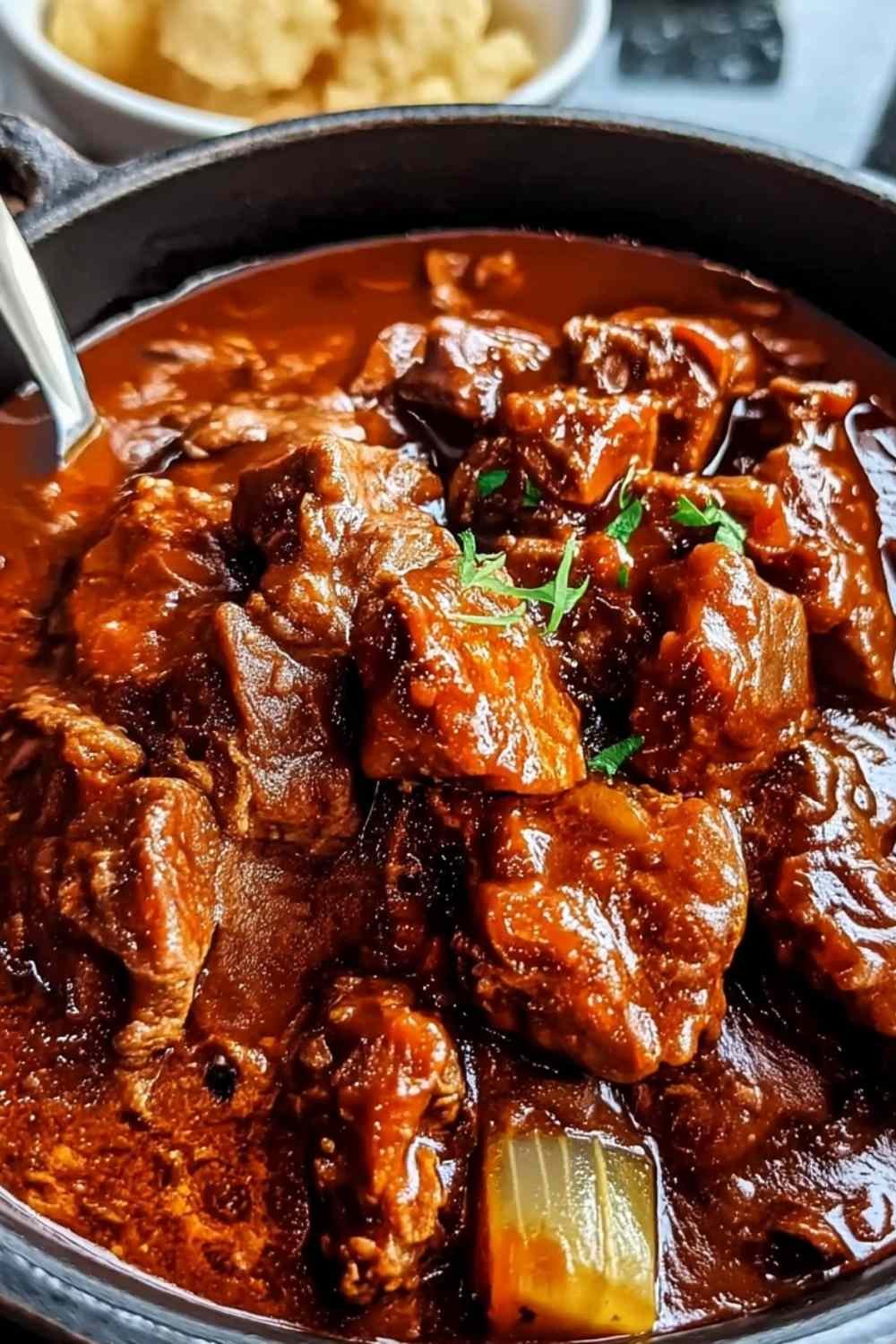
There’s something magical about a pot of Hungarian Goulash simmering on the stove, filling your kitchen with that unmistakable aroma of paprika and tender beef. This isn’t just any beef stew – it’s a soul-warming classic that transforms simple ingredients into something truly special.
Table of Contents
Ingredients for Hungarian Goulash
I always start with quality beef chuck for this recipe because it becomes incredibly tender during the long simmer and soaks up all those wonderful paprika flavors. The key to authentic goulash is using the right ingredients in the right proportions.
- 2 tablespoons olive oil
- 2 pounds beef chuck (cut into 1-inch cubes) – I recommend choosing well-marbled pieces for maximum tenderness
- 1 large onion (chopped)
- 2 bell peppers (any color, chopped) – My preference is to use one red and one yellow for visual appeal
- 3 cloves garlic (minced)
- 3 tablespoons sweet paprika – In my experience, Hungarian sweet paprika makes all the difference
- 1 teaspoon caraway seeds (optional) – I usually add these for authentic flavor
- 1 (14.5-ounce) can diced tomatoes (undrained)
- 4 cups beef broth – Pro tip: use low-sodium so you can control the salt level
- 1 bay leaf
- 1 teaspoon salt
- 1/2 teaspoon black pepper
- 2 large potatoes (peeled and cubed) – Yukon Gold work beautifully here
- 1 cup sour cream (for serving, optional)
- Fresh parsley (chopped, for garnish, optional)

Step-by-Step Instructions
I recommend using a heavy-bottomed Dutch oven for this recipe because it distributes heat evenly and prevents scorching during the long simmer.
Step 1: Heat olive oil in a large Dutch oven over medium-high heat. Pat the beef cubes completely dry with paper towels (this helps achieve a better sear) and season generously with salt and pepper. Working in batches to avoid crowding, brown the beef on all sides for about 3-4 minutes per batch until deeply golden. Crowding the pot creates steam instead of a proper sear. Remove with a slotted spoon and set aside.
Step 2: Add chopped onion and bell peppers to the same pot, scraping up any browned bits from the bottom. Cook for 5-7 minutes until softened and lightly caramelized. Stir in minced garlic and cook for 1 minute until fragrant, being careful not to burn it.
Step 3: Add sweet paprika and caraway seeds, stirring constantly for about 1 minute to toast the spices. This step is crucial – it releases the paprika’s essential oils and prevents it from tasting raw or bitter in the final dish. You’ll notice the paprika becomes fragrant and slightly darkened.
Step 4: Return the browned beef to the pot along with any accumulated juices. Add diced tomatoes with their liquid, beef broth, and bay leaf. Bring everything to a rolling boil, then reduce heat to low and cover. You want to maintain a gentle simmer where you see only occasional bubbles breaking the surface, around 200-210°F.
Step 5: Simmer gently for 1.5 to 2 hours, stirring occasionally, until the beef is fork-tender and nearly falling apart.
Step 6: Add cubed potatoes and continue simmering uncovered for 25-30 minutes until potatoes are tender when pierced with a fork. The liquid will have thickened into a rich, coating sauce.
Step 7: Remove the bay leaf, taste, and adjust seasoning with additional salt and pepper if needed. Serve hot with a dollop of sour cream and fresh parsley.
Perfect Pairings for Hungarian Goulash
This hearty goulash pairs beautifully with sides that can soak up the rich, paprika-infused sauce while adding textural contrast.
Crusty Bread: A warm loaf of sourdough or rustic bread is perfect for mopping up every last bit of that flavorful sauce, and the crispy crust provides a satisfying textural contrast to the tender beef.
Buttered Egg Noodles: Wide egg noodles tossed with butter create a comforting base that complements the goulash’s rich flavors without competing with them, making this a classic Central European pairing. If you enjoy creamy pasta dishes, try our creamy garlic parmesan chicken pasta for another satisfying option.
Cucumber Salad: A light, tangy cucumber salad dressed with vinegar and dill cuts through the richness of the goulash and adds a refreshing element that balances the meal perfectly.
Roasted Root Vegetables: Carrots, parsnips, or turnips roasted until caramelized bring natural sweetness and earthy flavors that enhance the savory notes in the goulash. Our garlic butter steak bites and potatoes offers similar hearty vegetable pairing ideas.
Simple Green Salad: A crisp salad with a light vinaigrette provides freshness and helps balance the heartiness of this substantial stew, especially appreciated during cooler months.
Keeping Your Goulash Fresh
Store leftover Hungarian Goulash in an airtight container in the refrigerator for up to 4 days. The flavors actually deepen and improve after a day or two, making this an excellent make-ahead meal for busy weeknights, similar to our slow cooker salisbury steak meatballs.
Reheat gently on the stovetop over medium-low heat, adding a splash of beef broth if the sauce has thickened too much. You can also reheat individual portions in the microwave for 2-3 minutes, stirring halfway through. Pro tip: I like to make a double batch and freeze half in freezer-safe containers for up to 3 months. To use frozen goulash, thaw overnight in the refrigerator, then reheat gently on the stovetop.
This goulash is incredibly versatile – serve it over rice, creamy mashed potatoes, or even polenta for variety. The leftovers make an excellent lunch the next day, and the dish reheats beautifully without losing its rich flavor or tender texture.
FAQs
Can I make Hungarian Goulash in a slow cooker?
Absolutely! Brown the beef and sauté the vegetables as directed, then transfer everything to your slow cooker. Cook on low for 6-8 hours or high for 3-4 hours, adding the potatoes during the last 1.5 hours of cooking.
What’s the difference between Hungarian Goulash and American goulash?
Hungarian Goulash is a rich beef stew with paprika, while American goulash is more of a pasta dish with ground beef and tomato sauce. They’re completely different recipes despite sharing the same name.
Can I use a different cut of beef?
While beef chuck is ideal for its marbling and tenderness, you can substitute beef stew meat or even short ribs. Avoid lean cuts like sirloin, as they’ll become tough during the long cooking time.
Hungarian Goulash
Ingredients
Equipment
Method
- Heat olive oil in a large Dutch oven over medium-high heat. Pat the beef cubes completely dry with paper towels and season generously with salt and pepper. Working in batches to avoid crowding, brown the beef on all sides for about 3-4 minutes per batch until deeply golden. Remove with a slotted spoon and set aside.
- Add chopped onion and bell peppers to the same pot, scraping up any browned bits from the bottom. Cook for 5-7 minutes until softened and lightly caramelized. Stir in minced garlic and cook for 1 minute until fragrant.
- Add sweet paprika and caraway seeds if using, stirring constantly for about 1 minute to toast the spices. This releases the paprika’s essential oils and prevents it from tasting raw. You’ll notice it becomes fragrant and slightly darkened.
- Return the browned beef to the pot along with any accumulated juices. Add diced tomatoes with their liquid, beef broth, and bay leaf. Bring everything to a rolling boil, then reduce heat to low and cover. Maintain a gentle simmer where you see only occasional bubbles breaking the surface, around 200-210°F.
- Simmer gently for 1.5 to 2 hours, stirring occasionally, until the beef is fork-tender and nearly falling apart.
- Add cubed potatoes and continue simmering uncovered for 25-30 minutes until potatoes are tender when pierced with a fork. The liquid will have thickened into a rich, coating sauce.
- Remove the bay leaf, taste, and adjust seasoning with additional salt and pepper if needed. Serve hot with a dollop of sour cream and fresh parsley if desired.