

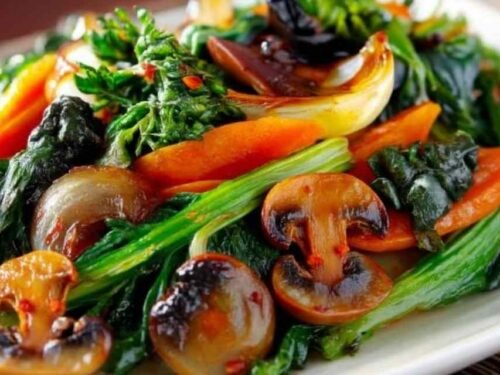
The smell of garlic hitting hot olive oil instantly takes me back to Tuesday nights when I’d come home exhausted and need dinner on the table fast. This Healthy Sautéed Vegetables recipe has saved me countless times – it’s the side dish I make when the fridge is full of random vegetables that need using up before the weekend grocery run.
Table of Contents
Ingredients for Healthy Sautéed Vegetables
I always keep olive oil and garlic on hand because they form the flavor base for so many quick dinners. For the vegetables, I grab whatever looks freshest at the store, though I’ve found this particular mix gives you great color variety and complementary textures.
- 2 tablespoons olive oil (or avocado oil for higher heat tolerance)
- 2 cloves garlic (minced fresh)
- 1 small onion (thinly sliced)
- 1 bell pepper (sliced, any color works)
- 1 medium zucchini (sliced into half-moons)
- 1 cup broccoli florets (cut into bite-sized pieces for even cooking)
- 1 medium carrot (julienned or thinly sliced)
- ½ cup snap peas
- ½ cup mushrooms (sliced) – I usually choose cremini or baby bella
- Salt and black pepper (to taste)
- 1 teaspoon lemon juice (optional, for brightness)
- 1 teaspoon balsamic vinegar or soy sauce (optional)
Optional toppings: toasted nuts, seeds, fresh herbs, or grated Parmesan
Step-by-Step Instructions
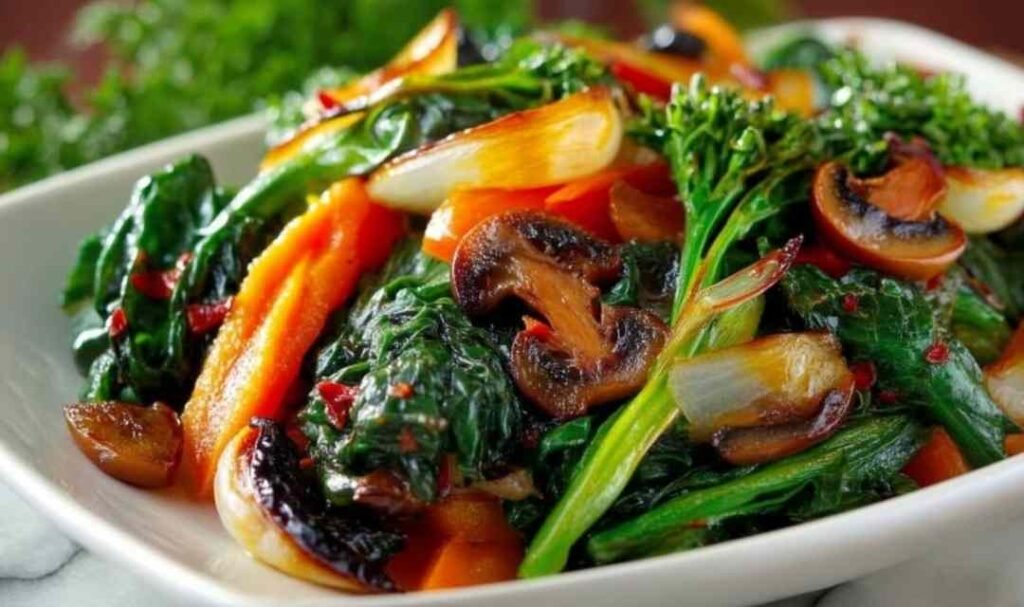
The key to perfectly sautéed vegetables is having everything prepped before you start cooking, since this moves quickly once the pan heats up.
Step 1: Wash all vegetables. Peel the carrot if desired (I usually do for better texture). Cut everything into similar-sized pieces so they cook evenly. This prep takes about 5 minutes.
Step 2: Heat a large 12-inch skillet over medium-high heat and add the olive oil. Let it warm for about 30 seconds until it shimmers and moves easily across the pan but doesn’t smoke.
Step 3: Add the minced garlic and sliced onions to the hot oil. Sauté for 1 to 2 minutes, stirring frequently to prevent the garlic from burning. You’ll smell the garlic become fragrant and see the onions start to soften and turn translucent at the edges.
Step 4: Add the carrots and broccoli florets first, since these denser vegetables need more time. Cook for 3 to 4 minutes, stirring often to ensure even cooking and prevent sticking.
Step 5: Toss in the bell peppers, zucchini, mushrooms, and snap peas. Sauté for another 5 to 6 minutes, stirring occasionally. The vegetables should be crisp-tender – tender enough to pierce with a fork but still with some bite, and their colors should be bright, not dull or overly soft. If your pan looks crowded and vegetables are steaming instead of sautéing, cook in two batches.
Step 6: Season with salt and black pepper to taste. If using, add lemon juice or balsamic vinegar and toss everything together. The acid brightens all the flavors. Remove from heat immediately to prevent overcooking.
Step 7: Transfer to a serving dish and garnish with your choice of toppings. Serve while hot for the best texture and flavor.
Perfect Pairings for Sautéed Vegetables
These vegetables work beautifully alongside both simple and complex main courses.
Garlic Butter Steak Bites: The lightness of sautéed vegetables balances perfectly with rich, buttery steak, adding color and nutrients without competing for attention on the plate.
Herb Roasted Chicken in Creamy White Wine Sauce: Fresh vegetables provide a crisp contrast to the creamy sauce while adding vitamins and fiber to round out the meal.
Rice or Quinoa Bowls: Layer these vegetables over warm grains with your choice of protein for a complete, balanced meal that’s perfect for meal prep.
Baked Cream Cheese Chicken Taquitos: Serve these vegetables on the side to add freshness and crunch alongside the crispy, cheesy taquitos.
Chicken with Mixed Vegetable Stir Fry: Double down on vegetables by pairing with this protein-rich stir fry for an extra nutritious dinner.
Sheet Pan Garlic Butter Chicken and Veggies: Create a complete vegetable-forward meal by serving both dishes family-style.
Keeping Your Vegetables Fresh
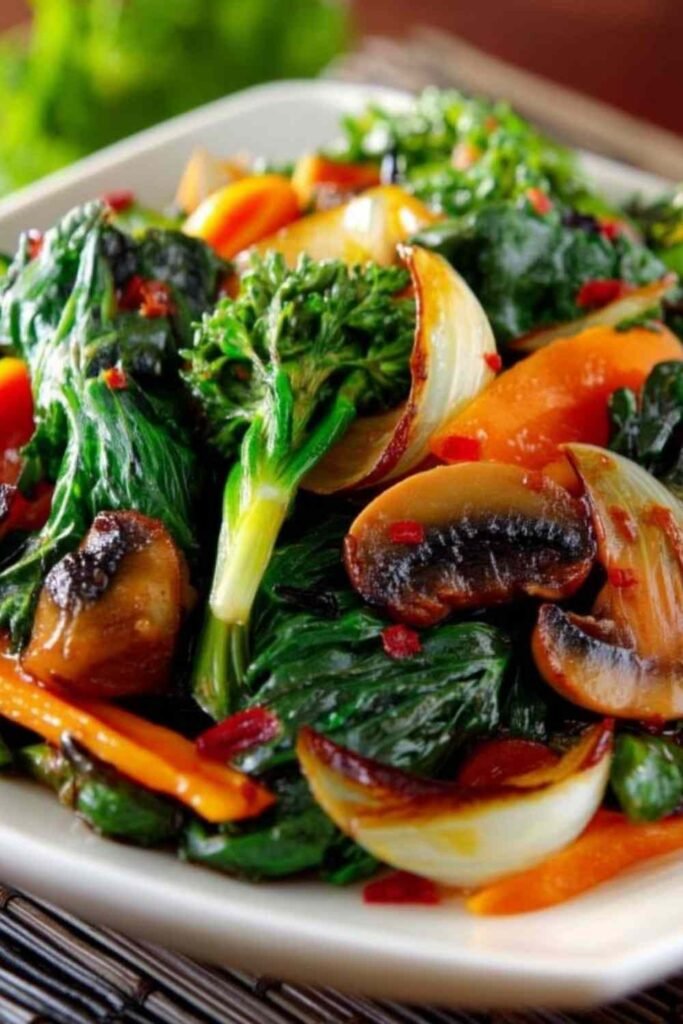
Store leftover sautéed vegetables in an airtight container in the refrigerator for 3 to 4 days. Note that the texture will soften slightly as they sit, though the flavor remains good.
For reheating, I always use a skillet over medium heat rather than the microwave. This helps restore some of the crispness and prevents the vegetables from becoming watery or mushy. Add a small splash of water or oil if they seem dry, and reheat just until warmed through – about 2 to 3 minutes.
These vegetables are incredibly versatile beyond their role as a side dish. Toss them into scrambled eggs for a veggie-packed breakfast, layer them in wraps or sandwiches, fold them into omelets, or blend them into soups for added nutrition and flavor.
FAQs
Can I use frozen vegetables instead of fresh?
Yes, you can use thawed frozen vegetables, but they may release more water during cooking. Pat them dry with paper towels first and expect a slightly softer texture than fresh.
How do I prevent my vegetables from getting mushy?
Cook over medium-high heat and avoid overcrowding the pan. If your skillet looks too full, cook the vegetables in two batches to maintain that crisp-tender texture.
What’s the best way to cut vegetables for even cooking?
Cut harder vegetables like carrots and broccoli into smaller pieces than softer ones like zucchini and peppers. This ensures everything finishes cooking at the same time.

Healthy Sautéed Vegetables
Ingredients
Equipment
Method
- Wash all vegetables. Peel the carrot if desired. Cut everything into similar-sized pieces so they cook evenly. This prep takes about 5 minutes.
- Heat a large 12-inch skillet over medium-high heat and add the olive oil. Let it warm for about 30 seconds until it shimmers and moves easily across the pan but doesn’t smoke.
- Add the minced garlic and sliced onions to the hot oil. Sauté for 1 to 2 minutes, stirring frequently to prevent the garlic from burning. You’ll smell the garlic become fragrant and see the onions start to soften and turn translucent at the edges.
- Add the carrots and broccoli florets first, since these denser vegetables need more time. Cook for 3 to 4 minutes, stirring often to ensure even cooking and prevent sticking.
- Toss in the bell peppers, zucchini, mushrooms, and snap peas. Sauté for another 5 to 6 minutes, stirring occasionally. The vegetables should be crisp-tender with bright colors. If your pan looks crowded and vegetables are steaming instead of sautéing, cook in two batches.
- Season with salt and black pepper to taste. If using, add lemon juice or balsamic vinegar and toss everything together. Remove from heat immediately to prevent overcooking.
- Transfer to a serving dish and garnish with your choice of toppings. Serve while hot for the best texture and flavor.