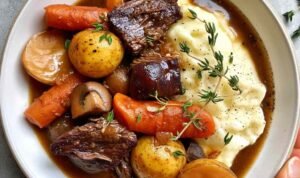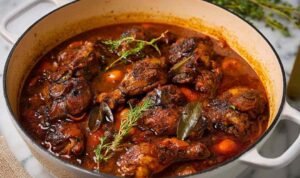


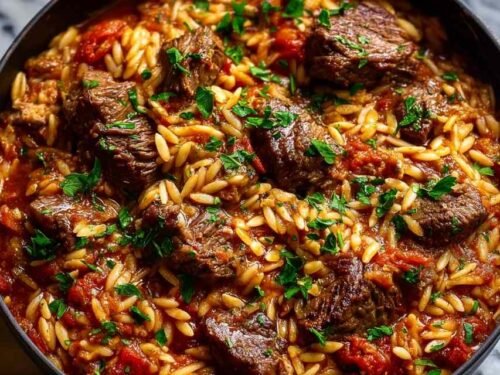
‘ll never forget the first time I tried making Beef Giouvetsi on a particularly freezing January evening in Denver. The house smelled like a Greek taverna, and I learned something important: patience really does pay off when braising beef. This Greek comfort classic transforms simple ingredients into something extraordinary, with beef that practically melts on your fork.
Table of Contents
Ingredients for Beef Giouvetsi
I’ve tested this recipe more times than I can count, and the ingredient list is beautifully straightforward. My go-to cut is chuck roast because it has just enough marbling to stay juicy during the long braise, and it becomes incredibly tender.
- 2 tablespoons olive oil
- 1 pound beef chuck (cut into 1-inch cubes) – I recommend choosing well-marbled pieces for maximum tenderness
- Salt and pepper to taste
- 1 onion (diced)
- 1 carrot (shredded, optional)
- 3 cloves garlic (chopped)
- 3 tablespoons tomato paste – In my experience, a good quality paste makes a noticeable difference
- ¼ cup red wine (or beef broth)
- 3 cups beef broth (or chicken broth)
- 1 (14.5 ounce) can whole tomatoes (crush by hand for better texture)
- ½ teaspoon cinnamon
- ¼ teaspoon allspice
- ¼ teaspoon nutmeg
- 2 dried bay leaves
- 1 cup orzo pasta (use gluten-free if needed)

Step-by-Step Instructions
I recommend taking your time with the browning step because it builds deep flavor that carries through the entire dish.
Step 1: Heat the olive oil in a large oven-safe pan or Dutch oven over medium-high heat. Season the beef cubes generously with salt and pepper, then brown them in batches for about 8-10 minutes total, turning occasionally until golden on most sides. Don’t overcrowd the pan or they’ll steam instead of brown. Remove the beef and set aside.
Step 2: Add the diced onion to the same pan and cook until softened and translucent, about 5 minutes. If using the carrot, add it now and cook for another minute. The vegetables will pick up all those delicious brown bits from the beef.
Step 3: Stir in the chopped garlic and tomato paste, cooking for about a minute until fragrant. Pour in the red wine to deglaze the pan, using a wooden spoon to scrape up any stuck bits from the bottom. Let it bubble for 30-60 seconds to cook off the alcohol.
Step 4: Add the broth, crushed tomatoes, cinnamon, allspice, nutmeg, bay leaves, and the browned beef back into the pan. Stir everything together. The liquid should mostly cover the beef. For stovetop method: bring to a boil, reduce the heat to low, and simmer covered for 2.5 to 4 hours until the beef is fall-apart tender. Check occasionally and add a splash of broth if needed. For oven method: cover and bake at 275°F for 2.5 to 4 hours. For slow cooker: transfer everything to the slow cooker and cook on LOW for 8-10 hours or HIGH for 4-6 hours.
Step 5: Once the beef shreds easily with a fork, stir in the orzo pasta. For stovetop: bring to a boil and cook uncovered for 10 minutes, stirring occasionally. For oven: cover and bake for 10-15 minutes. For slow cooker: switch to HIGH and cook covered for 10-15 minutes. The orzo will absorb the flavorful sauce and thicken the dish considerably. If it looks too thick, add a splash of broth.
Step 6: Remove the bay leaves before serving. Taste and adjust salt if needed since the orzo absorbs quite a bit of seasoning.
Delicious Side Dishes for Beef Giouvetsi
This rich, warming stew pairs beautifully with sides that add freshness and textural contrast.
Crusty Bread: A warm loaf of sourdough or ciabatta is essential for soaking up every drop of that incredible tomato sauce. The crispy exterior and chewy interior balance the tender beef perfectly. Try my garlic bread rolls for an even more flavorful option.
Greek Salad: Fresh cucumbers, tomatoes, red onion, and feta with a simple lemon-oregano dressing cut through the richness of the stew and add refreshing crunch. If you love Greek flavors, my Greek chicken tenders use a similar flavor profile.
Roasted Green Beans: Tossed with olive oil, lemon zest, and garlic, these provide a lighter vegetable component that won’t compete with the main dish’s robust flavors. My sheet pan sausage and veggies shows you another easy roasted vegetable technique.
Sautéed Spinach: Quickly wilted with garlic and a squeeze of lemon, spinach adds nutritional balance and a pop of color to your plate.
Orzo Alternatives: If you want to switch things up, this sauce also works beautifully over creamy garlic parmesan chicken pasta style preparations or with other pasta shapes.

Keeping and Enjoying Leftovers
Store leftovers in an airtight container in the refrigerator for up to 4 days. Honestly, this dish tastes even better the next day as the flavors continue to meld. The orzo will absorb more sauce as it sits, creating an even thicker consistency.
Reheat gently on the stovetop over medium-low heat, stirring occasionally and adding a splash of broth to loosen it up. You can also use the microwave in 1-minute intervals. I like to add a fresh sprinkle of feta or parmesan when serving leftovers for an extra flavor boost.
This recipe freezes beautifully for up to 3 months. Let it cool completely before transferring to freezer-safe containers. Thaw overnight in the refrigerator before reheating. For similar braised dishes that freeze well, check out my apple cider braised beef or short rib ragu.
FAQs
Can I use a different cut of beef?
Absolutely! While chuck roast is my favorite for its marbling and tenderness, you can use stew meat, short ribs, or even lamb shoulder. Just ensure whatever cut you choose has enough fat to stay moist during the long cooking time.
Why is my orzo mushy?
The orzo continues absorbing liquid as it sits, so it’s best to add it just before serving rather than letting it sit in the sauce for extended periods. If making ahead, cook the orzo separately and stir it in when reheating.
Can I make this in a regular pot instead of an oven-safe pan?
Yes! You can brown the meat and build the sauce in any heavy-bottomed pot, then simply let it simmer on the stovetop. Just keep the heat low and check occasionally to ensure nothing sticks to the bottom.

Beef Giouvetsi (Braised Beef and Orzo)
Ingredients
Equipment
Method
- Heat the olive oil in a large oven-safe pan or Dutch oven over medium-high heat. Season the beef cubes generously with salt and pepper, then brown them in batches for about 8-10 minutes total, turning occasionally until golden on most sides. Do not overcrowd the pan. Remove the beef and set aside.
- Add the diced onion to the same pan and cook until softened and translucent, about 5 minutes. If using carrot, add it now and cook for another minute.
- Stir in the chopped garlic and tomato paste, cooking for about 1 minute until fragrant. Pour in the red wine to deglaze the pan, using a wooden spoon to scrape up any stuck bits from the bottom. Let it bubble for 30-60 seconds.
- Add the broth, crushed tomatoes, cinnamon, allspice, nutmeg, bay leaves, and the browned beef back into the pan. Stir everything together. The liquid should mostly cover the beef. For stovetop: bring to a boil, reduce heat to low, and simmer covered for 2.5 to 4 hours until beef is fall-apart tender. For oven: cover and bake at 275°F for 2.5 to 4 hours. For slow cooker: transfer to slow cooker and cook on LOW for 8-10 hours or HIGH for 4-6 hours.
- Once the beef shreds easily with a fork, stir in the orzo pasta. For stovetop: bring to a boil and cook uncovered for 10 minutes, stirring occasionally. For oven: cover and bake for 10-15 minutes. For slow cooker: switch to HIGH and cook covered for 10-15 minutes. The orzo will thicken the dish considerably. Add a splash of broth if it looks too thick.
- Remove the bay leaves before serving. Taste and adjust salt if needed. Garnish with fresh parsley and crumbled feta cheese if desired.