

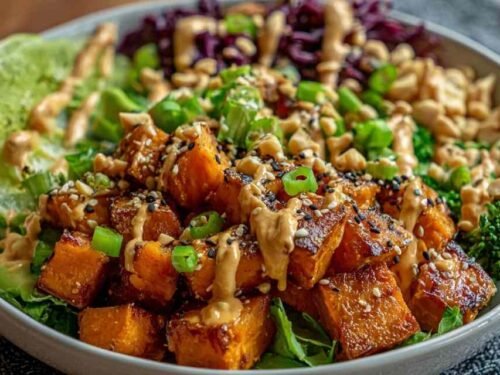
If you’re looking for a meal that nourishes your body while delivering serious flavor, this Thai Peanut Sweet Potato Buddha Bowl hits all the right notes. Roasted sweet potatoes meet crisp vegetables and a silky peanut sauce in this plant-based powerhouse that’s become my go-to when I want something both wholesome and satisfying.
Table of Contents
Ingredients for Thai Peanut Sweet Potato Buddha Bowl
I keep these ingredients stocked because this bowl has earned permanent status in our dinner rotation. The quality of your peanut butter makes a real difference here. I recommend natural peanut butter without added sugars for the cleanest flavor and smoothest sauce texture.
- 2 medium sweet potatoes (peeled and diced into 1-inch cubes)
- 1 cup broccoli florets (fresh or frozen both work)
- 1 cup green cabbage (shredded) – I usually grab pre-shredded to save time
- 1 ripe avocado (to be sliced just before serving)
- 1/2 cup carrots (grated) – My preference is using a box grater for ideal texture
- 1/4 cup fresh cilantro (chopped)
- 1/4 cup peanuts (chopped for garnish) – In my experience, roasted unsalted works best
- 2 tablespoons olive oil (for roasting)
- Salt and black pepper (to taste)
For the Peanut Sauce:
- 1/2 cup natural peanut butter – I always use creamy style for smooth results
- 2 tablespoons soy sauce (or tamari for gluten-free option)
- 1 tablespoon pure maple syrup
- 1 tablespoon fresh lime juice – Pro tip: roll the lime on the counter before juicing for maximum yield
- 1 teaspoon sesame oil
- 2-3 tablespoons warm water (for thinning to pourable consistency)

Step-by-Step Instructions
I recommend setting up your workspace before starting so everything flows smoothly once those sweet potatoes hit the oven. In my experience, cutting uniform cubes ensures perfectly even roasting.
Step 1: Preheat your oven to 400°F (conventional setting). Spread diced sweet potatoes on a large baking sheet in a single layer without crowding. Drizzle with olive oil, season generously with salt and pepper, then toss to coat every piece. Roast for 25-30 minutes, flipping halfway through, until golden-brown and tender when pierced with a fork. The edges should have some caramelization for best flavor.
Step 2: While the sweet potatoes roast, make your peanut sauce. In a small bowl, whisk together peanut butter, soy sauce, maple syrup, lime juice, and sesame oil until fully combined. The mixture will be thick at this stage. Add warm water one tablespoon at a time, whisking constantly until you achieve a pourable but creamy consistency that coats the back of a spoon. If it gets too thin, just add a bit more peanut butter.
Step 3: Prepare your fresh vegetables. In a large mixing bowl, combine broccoli florets, shredded cabbage, and grated carrots. If using raw broccoli and you prefer it slightly tender, blanch it briefly in boiling water for 2 minutes, then drain and cool. I often skip this for extra crunch, but it’s personal preference.
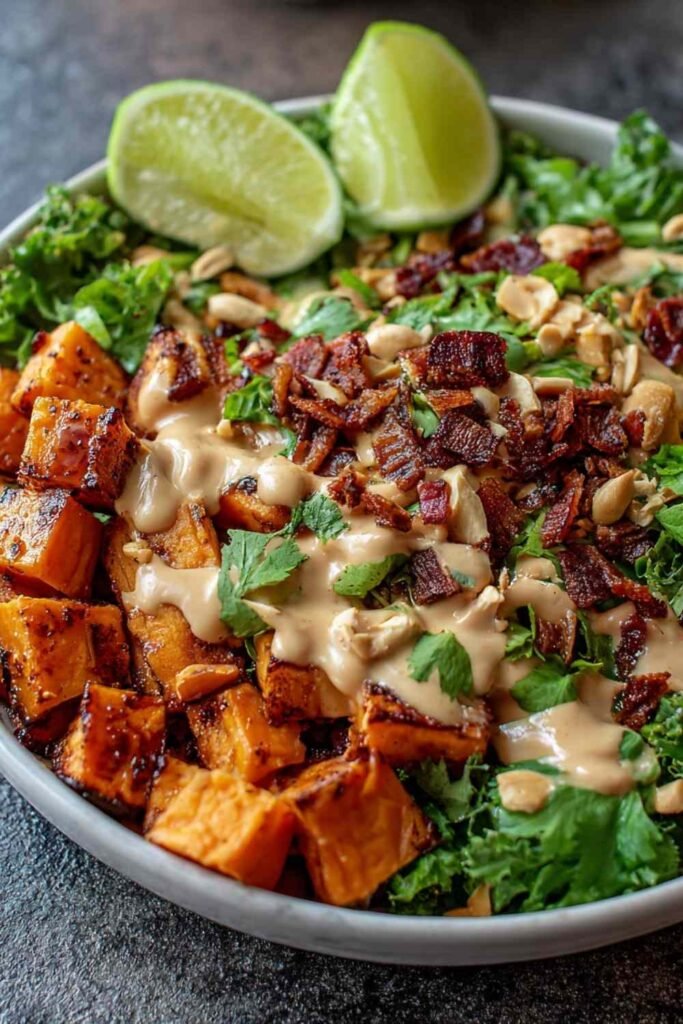
Step 4: Assemble your bowls when ready to serve. Divide the vegetable mixture between two serving bowls. Top each with warm roasted sweet potatoes straight from the oven. Slice the avocado and arrange it over the top. Drizzle generously with peanut sauce, then finish with fresh cilantro and chopped peanuts. The temperature contrast between warm sweet potatoes and cool vegetables creates the best eating experience.
Perfect Pairings for Thai Peanut Sweet Potato Buddha Bowl
This buddha bowl delivers satisfying nutrition on its own, but certain additions can boost the protein content or create a more substantial meal depending on your needs.
Quinoa or Brown Rice: A base layer of cooked grains underneath the vegetables transforms this into an even more filling meal. Coconut chicken and rice uses similar flavor profiles if you want to explore that direction.
Crispy Tofu: Pan-fried tofu cubes seasoned with soy sauce provide substantial plant-based protein and a delightful textural contrast to the soft sweet potatoes. Press the tofu well before cooking for the crispiest results.
Edamame: Steamed edamame adds both protein and bright green color that makes the bowl even more visually appealing while keeping everything completely plant-based. Just toss them in while still warm.
Asian-Inspired Sides: Consider pairing with sticky garlic chicken noodles if feeding a mixed crowd with different dietary preferences, or try Thai drunken noodles for complementary Thai flavors.
Protein Additions: For those wanting more substantial protein, maple glazed chicken with sweet potatoes offers similar roasted sweet potato preparation, while sausage and sweet potatoes with honey garlic sauce provides another sweet-savory combination.
Extra Toppings: A sprinkle of toasted sesame seeds adds nutty flavor and crunch that complements the peanut sauce beautifully. Extra lime wedges on the side let everyone adjust the brightness to their taste, which my family really appreciates.
Storage and Serving Tips
Store the components separately in airtight containers for up to 3 days in the refrigerator. I recommend keeping the peanut sauce in a small jar so it stays fresh and doesn’t make the vegetables soggy. The sweet potatoes can be stored warm or cold and taste great either way. Don’t store sliced avocado with the other components as it will brown quickly.
When reheating, I prefer warming just the sweet potatoes in the microwave for 1-2 minutes while keeping the fresh vegetables cold for optimal texture contrast. You can also enjoy this bowl completely cold as a refreshing lunch during warmer months. The sauce may thicken in the fridge, so add a splash of warm water and whisk before using.
This recipe is incredibly versatile. Try swapping butternut squash for sweet potatoes, or use different vegetables based on what’s in season. The peanut sauce works beautifully with almost any combination of roasted vegetables and greens. For more vegetable-forward options, chicken with mixed vegetable stir fry and sheet pan sausage and veggies offer different preparation methods for veggie-packed dinners.
FAQs
Can I make this recipe nut-free?
Yes, substitute sunflower seed butter or tahini for the peanut butter, and use sunflower seeds instead of peanuts for garnish. The flavor profile will shift but remains equally delicious.
How do I prevent the sweet potatoes from becoming mushy?
Make sure they’re cut into uniform cubes and spread in a single layer without overcrowding the pan. Overcrowding causes steaming instead of roasting, which leads to soft, mushy texture instead of caramelized edges.
Can I meal prep this buddha bowl?
Absolutely. Prep all components separately and store in individual containers. Assemble fresh bowls throughout the week, adding the avocado and sauce just before eating for optimal freshness and texture.

Thai Peanut Sweet Potato Buddha Bowl
Ingredients
Equipment
Method
- Preheat your oven to 400°F (conventional setting). Spread diced sweet potatoes on a large baking sheet in a single layer without crowding. Drizzle with olive oil, season generously with salt and pepper, then toss to coat. Roast for 25-30 minutes, flipping halfway through, until golden-brown and tender when pierced with a fork.
- While the sweet potatoes roast, make your peanut sauce. In a small bowl, whisk together peanut butter, soy sauce, maple syrup, lime juice, and sesame oil until fully combined. Add warm water one tablespoon at a time, whisking constantly until you achieve a pourable but creamy consistency that coats the back of a spoon.
- Prepare your fresh vegetables. In a large mixing bowl, combine broccoli florets, shredded cabbage, and grated carrots. If using raw broccoli and you prefer it slightly tender, blanch briefly in boiling water for 2 minutes, then drain and cool.
- Assemble your bowls when ready to serve. Divide the vegetable mixture between two serving bowls. Top each with warm roasted sweet potatoes. Slice the avocado and arrange it over the top. Drizzle generously with peanut sauce, then finish with fresh cilantro and chopped peanuts.