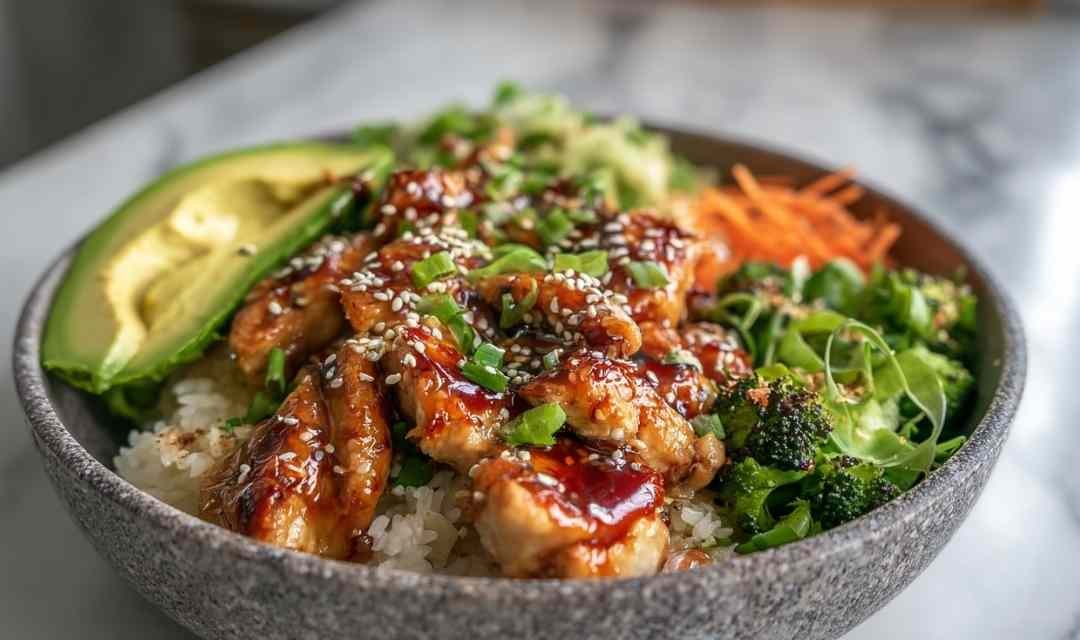


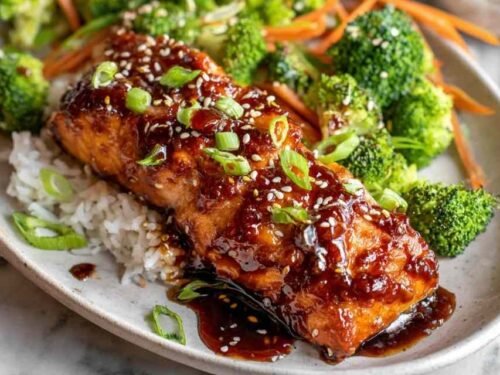
When I’m racing against the clock on busy weeknights, this baked teriyaki salmon saves dinner every single time.
The sticky-sweet glaze caramelizes beautifully in the oven, and honestly, it tastes just as good as takeout but comes together in half an hour. I started making this when my kids began requesting “that salmon with the sauce” at least twice a week, and now it’s a permanent fixture in our dinner rotation.
Table of Contents
Ingredients for Baked Teriyaki Salmon
I keep salmon fillets stocked in my freezer specifically for this recipe because it’s that reliable for last-minute dinners. The homemade teriyaki sauce makes all the difference, but I’ll be honest and say store-bought works in a pinch when life gets hectic. Here’s everything you need:
- 4 salmon fillets (about 4 ounces each, skin-on)
- 1 batch homemade teriyaki sauce (or 1 cup store-bought)
For serving:
- 2 cups cooked white rice
- 2 cups steamed broccoli
- ⅓ cup diced scallions
- 1 tablespoon sesame seeds
- Red pepper flakes to taste
I recommend keeping the skin on during baking – it acts as a protective barrier and keeps the fish incredibly moist. When shopping, look for bright, firm salmon with no fishy odor. In my experience, wild-caught salmon has better flavor, but farmed works perfectly fine for this recipe. My preference is to use jasmine or basmati rice for serving because they complement the Asian-inspired flavors beautifully.
Step-by-Step Instructions
I recommend having all your ingredients prepped before you start because this recipe moves quickly once the oven is hot.
Step 1: If using frozen salmon, thaw it completely in the refrigerator overnight. Preheat your oven to 400°F. Prepare your teriyaki sauce and set aside.
Step 2: Lightly oil a 9×13-inch baking dish to prevent sticking. Decide whether you want cubed salmon (cooks faster, more surface area for sauce) or whole fillets (easier, more elegant presentation).
Step 3: For cubed salmon, cut fillets into 1-inch pieces after removing skin. For whole fillets, place them skin-side down in the dish. Brush or spoon half the teriyaki sauce over the salmon, coating evenly.
Step 4: For best flavor, marinate the salmon for 15-20 minutes at room temperature. If you’re short on time, you can skip this step and bake immediately – the salmon will still absorb plenty of flavor during cooking.
Step 5: Bake uncovered for 12-18 minutes for whole fillets or 10-14 minutes for cubes. The salmon is done when it flakes easily with a fork and reaches an internal temperature of 145°F. Check at the 10-minute mark to avoid overcooking.
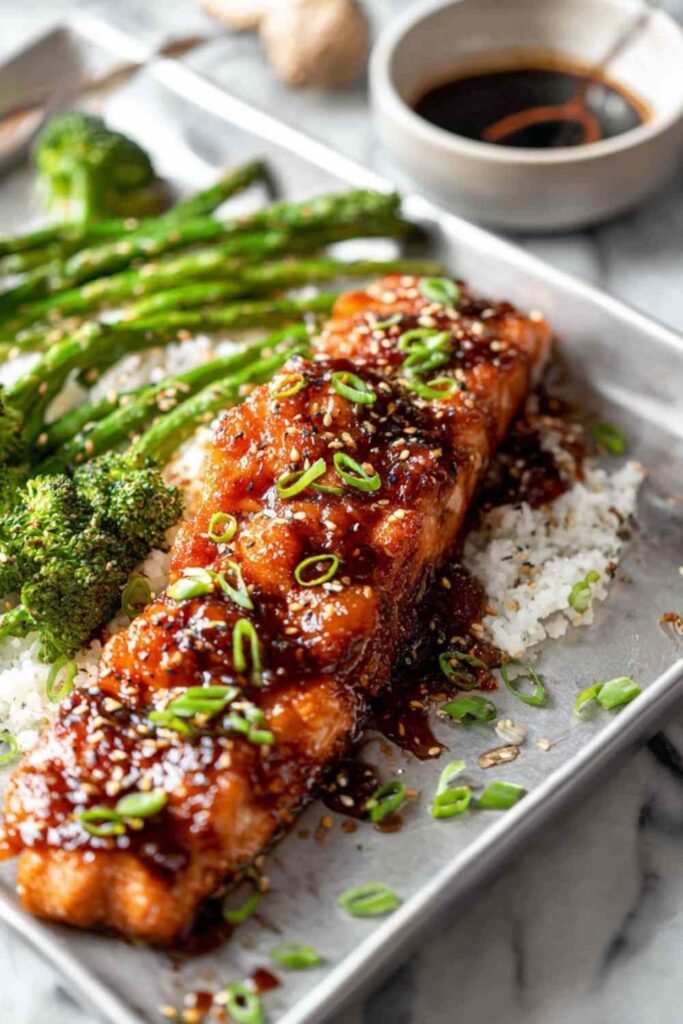
Step 6: For caramelized, crispy edges, switch to broil for the final 2 minutes. Watch carefully to prevent burning. Remove from oven, drizzle with remaining teriyaki sauce, and garnish with sesame seeds, scallions, and red pepper flakes.
Perfect Pairings for Teriyaki Salmon
This glazed salmon works beautifully with sides that balance its sweet-savory richness and provide textural contrast.
Cilantro Lime Rice: The bright citrus and herb notes cut through the richness of the teriyaki glaze while the fluffy rice soaks up every bit of that delicious sauce.
Steamed Broccoli: The mild bitterness of broccoli creates perfect balance against the sweet salmon, plus it adds essential fiber and nutrients to round out your meal.
Edamame: These protein-packed soybeans enhance the Asian-inspired theme while adding a fun, slightly crunchy texture that kids especially love.
Cauliflower Rice: For a lighter, grain-free option that still provides that satisfying base, cauliflower rice absorbs the teriyaki sauce beautifully while keeping the meal paleo-friendly.
Stir-Fried Vegetables: Bell peppers, snap peas, and carrots add colorful crunch and additional nutrients, making this a complete balanced dinner in one serving.
Quinoa: This protein-rich grain provides a nutty flavor and fluffy texture that complements the salmon while adding extra nutritional value for health-conscious families.
Storing Your Salmon
Store leftover teriyaki salmon in an airtight container in the refrigerator for up to 2 days. Let it cool completely before sealing to maintain the best texture and prevent condensation.
For reheating, I recommend using gentle heat on the stovetop over medium-low or in a 300°F oven for 5-7 minutes. The microwave works if you’re rushed, but use 50% power to prevent the salmon from drying out.
This salmon transforms beautifully into next-day meals. Flake it over a fresh green salad, toss with noodles, or serve cold in a rice bowl. The teriyaki flavor actually deepens overnight, making leftovers just as delicious as the original dinner.
FAQs
Can I use frozen salmon without thawing?
Yes, add 5-10 minutes to the cooking time. The teriyaki sauce won’t penetrate as deeply, so reserve extra sauce to add after cooking for maximum flavor.
How do I know when the salmon is perfectly cooked?
The salmon should reach 145°F internally and flake easily with a fork. The flesh should be opaque throughout with a slightly pink center if you prefer medium doneness.
Can I make this in an air fryer?
Absolutely. Marinate for 20 minutes, then air fry at 380°F for 8-12 minutes for cubes or 10-14 minutes for whole fillets. The air fryer creates extra crispy edges.

Baked Teriyaki Salmon
Ingredients
Equipment
Method
- If using frozen salmon, thaw completely in the refrigerator overnight. Preheat oven to 400°F. Prepare teriyaki sauce and set aside.
- Lightly oil a 9×13-inch baking dish. For cubed salmon, cut fillets into 1-inch pieces after removing skin. For whole fillets, place skin-side down in the dish.
- Brush or spoon half the teriyaki sauce over the salmon, coating evenly. For best flavor, marinate for 15-20 minutes at room temperature, or proceed directly to baking if short on time.
- Bake uncovered for 12-18 minutes for whole fillets or 10-14 minutes for cubes. Salmon is done when it flakes easily with a fork and reaches 145°F internal temperature. Check at 10 minutes to avoid overcooking.
- Optional: Switch to broil for final 2 minutes for caramelized, crispy edges. Watch carefully to prevent burning.
- Remove from oven and drizzle with remaining teriyaki sauce. Garnish with sesame seeds, scallions, and red pepper flakes before serving.
Notes