


Butternut squash casserole is one of those dishes that makes your kitchen smell like pure autumn magic. I still remember making this on a rainy October evening in 2021 after my neighbor shared fresh fennel from her garden (I’d never cooked with it before and was honestly nervous). The combination of sweet roasted squash, caramelized fennel, and melted Gruyere had my kids scraping their plates clean, and my husband declared it “better than Thanksgiving stuffing.”
Table of Contents
Ingredients for Butternut Squash Casserole
I’ve made this casserole at least a dozen times, and I’ve learned that ingredient quality really matters here. The squash needs to roast until the edges caramelize slightly, which brings out natural sweetness that makes the whole dish sing. Pro tip: if you’re short on time, pre-cut butternut squash from the grocery store works beautifully and saves about 15 minutes of prep.
- 2 pounds butternut squash (peeled and cubed into 1-inch chunks)
- 2 Honeycrisp apples (peeled, cored, and cubed to match squash size) – I prefer Honeycrisp for their sweet-tart balance and firm texture
- 2 tablespoons olive oil (plus 2-3 tablespoons extra for cooking)
- 1/2 teaspoon salt (plus more to taste)
- 1/4 teaspoon black pepper (plus more to taste)
- 2 tablespoons pure maple syrup (divided) – My go-to is Grade A amber for the best flavor depth
- 1/2 teaspoon ground dried sage
- 1 1/2 teaspoons Herbes de Provence
- 1/2 pound sweet Italian sausage (casings removed and crumbled)
- 2 small fennel bulbs (stalks removed, halved, cored, and thinly sliced) – In my experience, slicing as thin as possible helps them caramelize beautifully
- 1 onion (quartered and thinly sliced)
- 1 cup grated Gruyere cheese – I usually grate my own from a block; it melts more smoothly than pre-shredded
- Fresh sage leaves (for garnish, optional)
Step-by-Step Instructions
I recommend having all your ingredients prepped before you start cooking. The multitasking gets easier when everything is ready to go, and you can focus on getting those perfect caramelized edges on your vegetables.
Step 1: Preheat your oven to 425°F and line a baking sheet with foil lightly misted with cooking spray. In a large bowl, toss the cubed butternut squash and apples with 2 tablespoons olive oil, 1/2 teaspoon salt, 1/4 teaspoon black pepper, 1 tablespoon maple syrup, dried sage, and Herbes de Provence until everything is evenly coated and glistening.
Step 2: Spread the squash mixture onto your prepared baking sheet in a single layer, making sure pieces aren’t touching (this helps them roast rather than steam). Roast for 35 minutes, stirring every 10-12 minutes to ensure even caramelization. The squash is ready when it’s fork-tender with golden-brown edges and some pieces have darker caramelized spots.
Step 3: While the vegetables roast, heat a large skillet over medium-high heat with a drizzle of olive oil (about 1 tablespoon). Once the oil is shimmering (about 2 minutes), add the crumbled sausage and cook for 4-5 minutes, breaking it up with a wooden spoon, until browned and cooked through with no pink remaining. Transfer to a bowl and set aside.
Step 4: Using the same skillet (this keeps all those flavorful browned bits), add another tablespoon of oil if the pan looks dry. Add the sliced fennel and onion and cook for 10-12 minutes, stirring occasionally, until deeply golden, soft, and almost jammy in texture. The vegetables should be caramelized with some darker spots and reduced in volume by about half. Add the caramelized vegetables to the bowl with the sausage.
Step 5: Once the squash and apples finish roasting, switch your oven setting to broil. Transfer the roasted vegetables to a large bowl and gently fold in the sausage-fennel mixture along with the remaining tablespoon of maple syrup. Taste and adjust seasoning with additional salt and pepper to achieve that perfect sweet-savory balance.
Step 6: Spoon the mixture into a 9×13-inch baking dish (or similar 2-quart casserole dish) and spread evenly. Top with grated Gruyere cheese and place under the broiler for 2-3 minutes, watching very carefully to prevent burning, until the cheese is melted, golden, and bubbling. Garnish with fresh sage leaves before serving.

Perfect Fall Side Dishes for Your Butternut Squash Casserole
This casserole pairs beautifully with both light and hearty sides. Here are my favorite combinations that balance flavors and textures:
Simple Arugula Salad: The peppery bite of fresh arugula dressed with lemon vinaigrette cuts through the richness of the cheese and sausage, creating a balanced plate that doesn’t feel heavy. The bright citrus notes complement the maple sweetness perfectly.
Garlic Green Beans: Quick-sautéed green beans with garlic butter add a crisp texture contrast and bring fresh vegetable balance to the sweet and savory flavors of the casserole. The garlic echoes the herbs in the dish without overwhelming.
Crusty Sourdough Bread: A warm slice of sourdough is perfect for soaking up any maple-glazed juices and adds satisfying substance when serving this as a side dish rather than a main course.
Wild Rice: Nutty wild rice complements the earthy fall flavors beautifully and makes the meal more filling when serving this as a main course. The chewy texture provides nice contrast to the tender roasted vegetables.
Roasted Sweet Potatoes: Double down on fall flavors with maple-roasted sweet potatoes. The complementary sweetness and similar caramelized edges create a cohesive autumn feast that’s perfect for holiday tables.
Herb-Roasted Chicken: When serving this casserole as a side dish for holiday dinners, roasted chicken with herbs ties together all the savory elements and creates an impressive spread.
Storage Tips and Make-Ahead Instructions
This casserole actually tastes even better the next day as the maple and herb flavors meld together overnight. Store leftovers in an airtight container in the refrigerator for up to 4 days. Reheat individual portions in the microwave for 2-3 minutes, or warm the entire dish covered with foil in a 350°F oven for about 20 minutes until heated through.
For make-ahead preparation, assemble the entire casserole without adding the cheese, let it cool completely, then cover tightly with plastic wrap or foil and refrigerate for up to 24 hours. Remove from the fridge 2-3 hours before serving to bring to room temperature, top with grated cheese, and bake at 350°F for 25-30 minutes until hot throughout. Switch to broil for the final 2-3 minutes to achieve that golden, bubbly cheese topping.
This casserole works beautifully for meal prep, too. The flavors develop over time, and the convenience of having a complete dish ready to reheat makes busy weeknights much easier. Just be aware that the squash texture will soften slightly after refrigeration, which is why I don’t recommend freezing this dish (the water content in squash and apples creates an unpleasant mealy texture when frozen and thawed).
FAQs
Can I use frozen butternut squash for this recipe?
I don’t recommend frozen squash as it contains excess moisture that makes the casserole watery and prevents proper caramelization. Fresh squash or refrigerated pre-cut squash gives the best texture and flavor.
What can I substitute for fennel if I can’t find it?
Use an additional onion plus an extra cup of butternut squash and apple. You’ll still get wonderful caramelized sweetness, just without the subtle anise-like notes that fennel provides.
How do I know when the fennel is properly caramelized?
The fennel should be deeply golden brown, reduced in volume by about half, soft enough to mash with a fork, and slightly sticky or jammy in texture. This usually takes the full 10-12 minutes over medium-high heat.
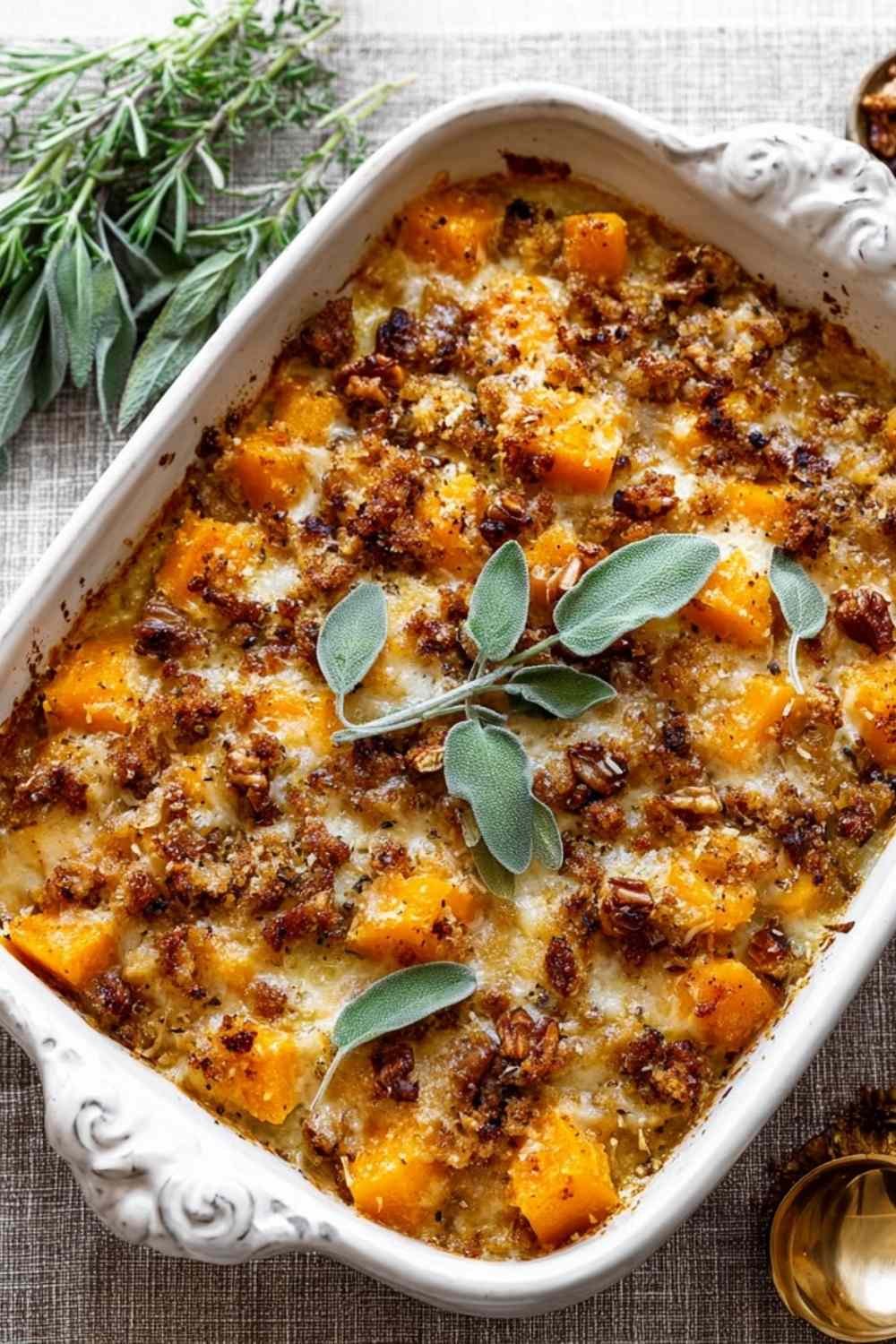
Butternut Squash Casserole
Ingredients
Equipment
Method
- Preheat your oven to 425°F and line a baking sheet with foil lightly misted with cooking spray. In a large bowl, toss the cubed butternut squash and apples with 2 tablespoons olive oil, 1/2 teaspoon salt, 1/4 teaspoon black pepper, 1 tablespoon maple syrup, dried sage, and Herbes de Provence until everything is evenly coated.
- Spread the squash mixture onto your prepared baking sheet in a single layer. Roast for 35 minutes, stirring every 10-12 minutes to ensure even caramelization. The squash is ready when it’s fork-tender with golden-brown edges.
- While the vegetables roast, heat a large skillet over medium-high heat with a drizzle of olive oil (about 1 tablespoon). Once the oil is shimmering (about 2 minutes), add the crumbled sausage and cook for 4-5 minutes until browned and cooked through. Transfer to a bowl and set aside.
- Using the same skillet (add another tablespoon of oil if needed), add the sliced fennel and onion. Cook for 10-12 minutes, stirring occasionally, until deeply golden and almost jammy in texture. Add the caramelized vegetables to the bowl with the sausage.
- Once the squash and apples finish roasting, switch your oven setting to broil. Transfer the roasted vegetables to a large bowl and gently fold in the sausage-fennel mixture along with the remaining tablespoon of maple syrup. Taste and adjust seasoning with additional salt and pepper if needed.
- Spoon the mixture into a 9×13-inch baking dish and top with grated Gruyere cheese. Place under the broiler for 2-3 minutes, watching carefully to prevent burning, until the cheese is melted and golden. Garnish with fresh sage leaves before serving.
Notes