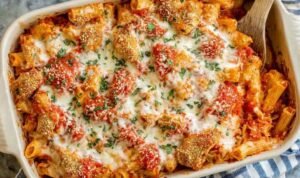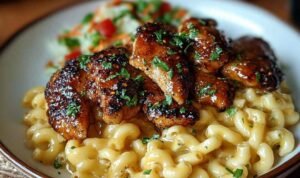


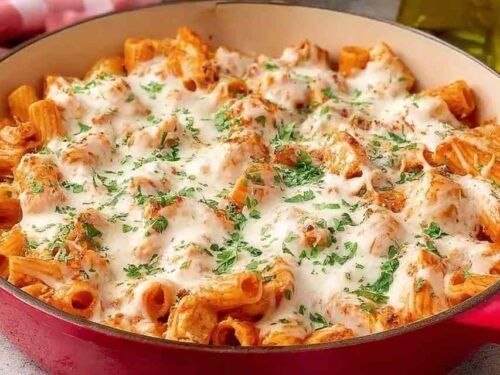
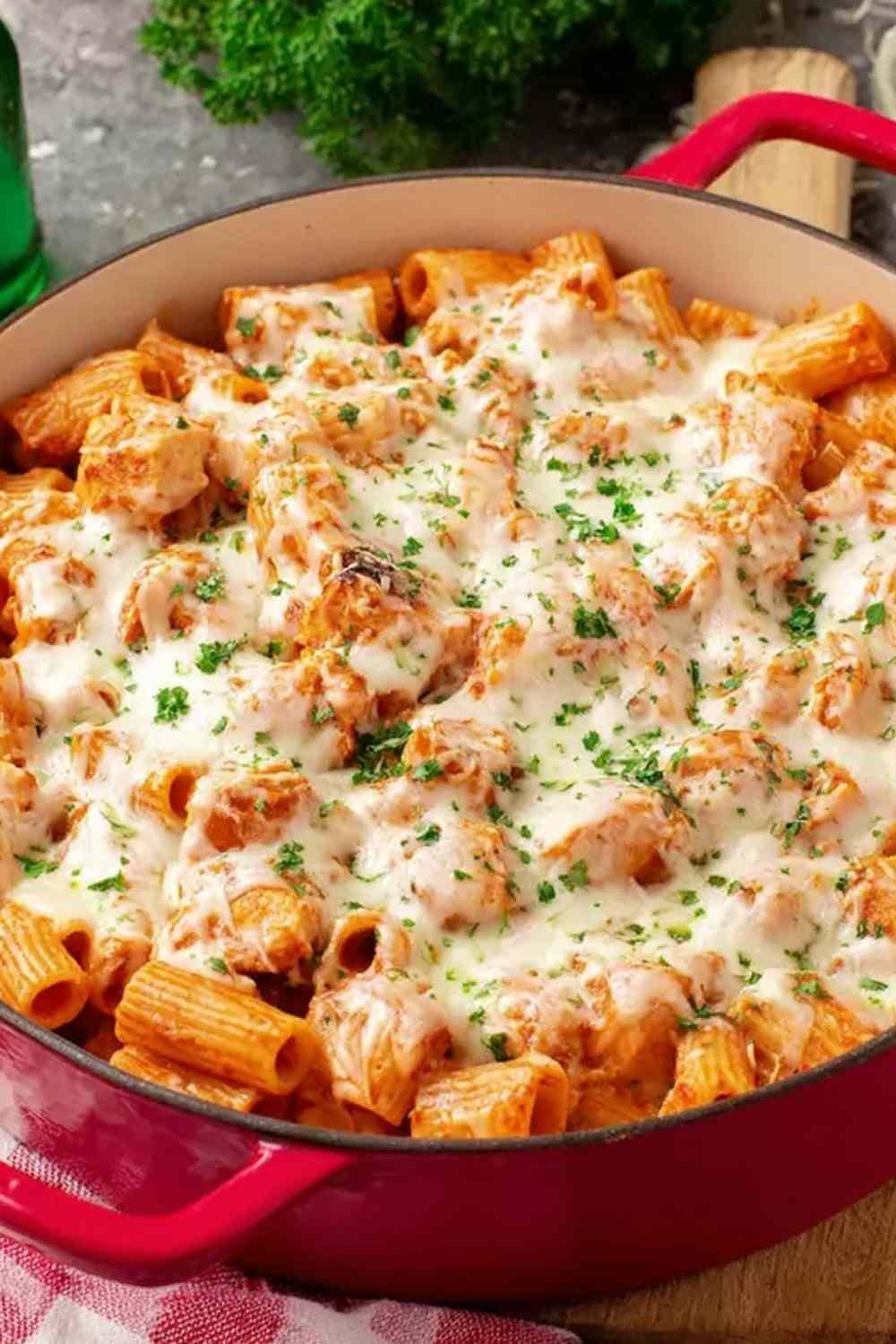
Baked chicken parmesan pasta is the kind of dinner that fills the whole house with the smell of bubbling marinara and melted cheese before it even hits the table. It is a one-pot meal built around tender chicken breasts, hearty pasta, and a golden broiled mozzarella top that my kids start asking about the moment they walk in the door. I have made this on repeat for years and it never gets old.
The first time I threw this together on a Wednesday night, I was not expecting much — just trying to use up a couple of chicken breasts before they went bad. What came out of that pot was so good it went straight into the weekly rotation. This baked chicken parmesan pasta has everything you want in a family dinner: real comfort, minimal cleanup, and that bubbly browned cheese topping that makes everyone crowd around the pan. Your family will thank you!
Table of Contents
Ingredients for Baked Chicken Parmesan Pasta
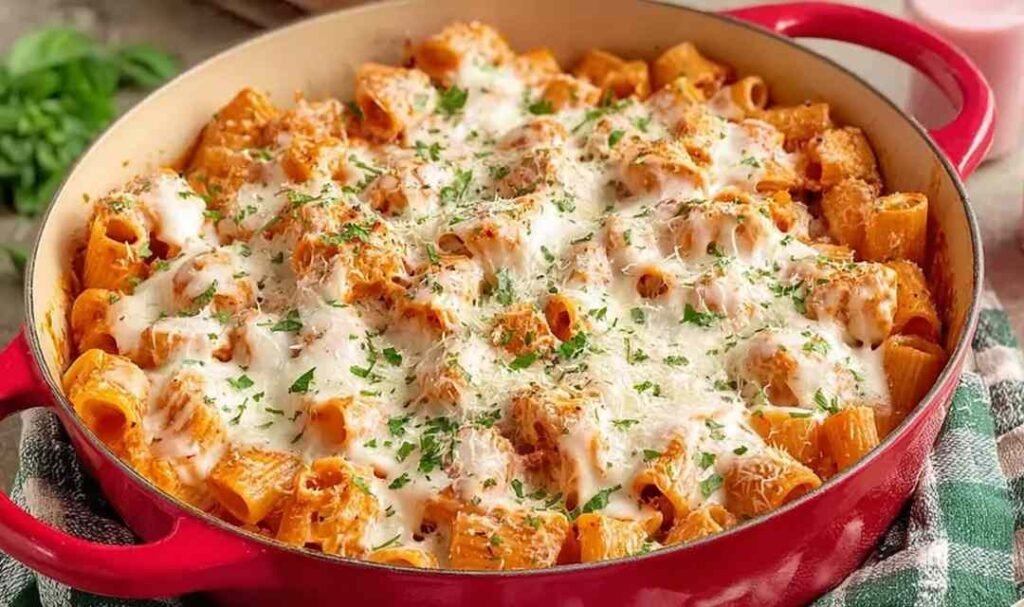
I always use boneless, skinless chicken breasts for this recipe because they hold up well during the simmer and slice cleanly when it is time to serve. For the pasta, my preference is rigatoni — the ridges grab the marinara sauce in a way that penne just cannot match.
For the Pasta:
- 2 to 3 boneless skinless chicken breasts (about 6 to 8 oz each)
- 16 oz dried short pasta (rigatoni, penne, or ziti) — I recommend rigatoni for the best sauce coverage
- 24 oz marinara sauce
- 1 cup water
- 1 medium yellow onion, diced into 1/4-inch pieces
- 3 cloves garlic, freshly minced — in my experience, fresh minced garlic makes a noticeable difference over jarred
- 1 tsp Italian seasoning
- 1/2 tsp garlic powder
- Salt and black pepper to taste
- 1 cup shredded mozzarella cheese, divided (1/4 cup for stirring in, 3/4 cup for broiling)
- 1/2 cup freshly grated Parmesan cheese — pro tip, freshly grated Parmesan melts much smoother than pre-shredded
- Oil for cooking
For the Garnish:
- Fresh basil, torn just before serving
- Fresh parsley, chopped
- Additional dried Italian seasoning
Step-by-Step Instructions
I recommend reading through all the steps before you start — this recipe moves through the pot to the broiler, and knowing what comes next keeps everything running smoothly.
Step 1: Heat a drizzle of oil in a large pot over medium-high heat. Season chicken breasts on both sides with salt, pepper, Italian seasoning, and garlic powder. Sear for 5 minutes on the first side without moving — you want a golden crust. Flip and cook another 3 to 4 minutes. Remove to a plate. The chicken will not be fully cooked at this stage and that is intentional.
Step 2: In the same pot, add the diced onion and minced garlic. Stir for 2 to 3 minutes until softened and fragrant, scraping up any browned bits from the bottom. Those browned bits carry a lot of flavor — do not skip this step.
Step 3: Pour in the marinara sauce and water. Bring to a gentle boil, then reduce heat to medium-low. Add the seared chicken back in along with the dried pasta. Stir to distribute evenly, cover, and cook for 10 to 15 minutes, stirring occasionally. The pasta is done when tender and the chicken reaches an internal temperature of 165 degrees F. Use a meat thermometer for accuracy.
Step 4: Remove the pot from heat. Stir in the Parmesan and 1/4 cup of the mozzarella. The residual heat melts both cheeses into the sauce for a creamy, cohesive finish. If the sauce looks too thick, add a small splash of water and stir.
Step 5: Transfer the mixture to a 9×13 inch baking dish. Spread the remaining 3/4 cup of mozzarella evenly across the top. Place under a preheated broiler for 2 to 3 minutes, watching closely, until the cheese is melted and lightly golden in spots. Do not walk away — broilers work fast.
Step 6: Let rest for 1 to 2 minutes, then top with torn fresh basil, chopped parsley, and a sprinkle of dried Italian seasoning. Serve immediately.
What to Serve with Baked Chicken Parmesan Pasta
This dish is hearty and saucy, so it pairs best with sides that are light, crisp, or refreshing to balance the richness.
Garlic Bread: Classic and crowd-pleasing — a warm, crusty garlic bread is the perfect vehicle for soaking up any extra marinara from the pan and keeps the Italian theme going strong.
Simple Green Salad: A lightly dressed green salad with lemon vinaigrette cuts through the richness of the cheese and gives the meal a fresh, balanced feel. This Mediterranean chickpea salad with lemon vinaigrette is a great ready-made option that complements the Italian flavors here.
Garlic Parmesan Potato Wedges: For a more filling spread, these baked garlic Parmesan potato wedges use the same Parmesan flavor profile and make an easy, crowd-friendly side for family dinners.
Light Broccoli Pasta: If you want a vegetable-forward side that stays on theme, this light and healthy broccoli pasta works well as a lighter companion dish when feeding a larger group.
Chicken Parmesan Casserole: For a dinner party spread or a make-ahead option alongside this recipe, this chicken parmesan casserole shares the same flavor DNA and gives guests a second option with a different texture.
Healthy Sauteed Vegetables: A simple pan of healthy sauteed vegetables adds color, fiber, and a light crunch that rounds out the meal without competing with the bold marinara and cheese flavors.
How to Store and Reheat Leftovers
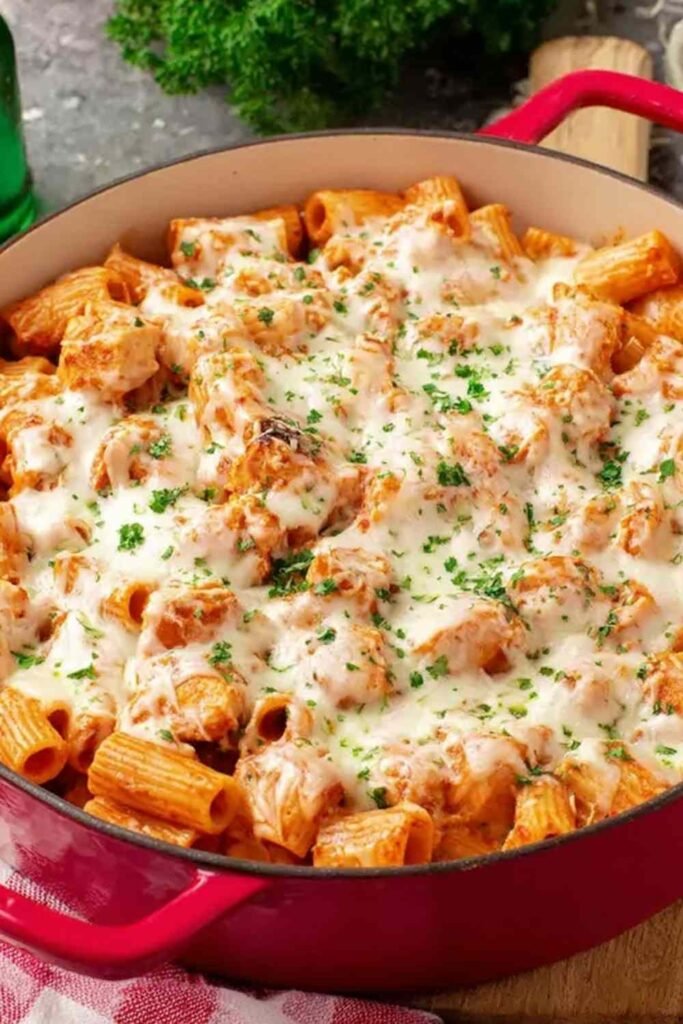
Store leftover baked chicken parmesan pasta in an airtight container in the refrigerator for up to 4 days. The pasta continues to absorb the sauce as it sits, so it will be thicker when you reheat it — that is completely normal.
To reheat, I recommend the microwave with a damp paper towel placed loosely over the top to trap steam. Add a small splash of water or marinara before heating to loosen the sauce back up. For best results on the broiled cheese top, reheat in the oven at 350 degrees F for 10 minutes instead.
Pro tip: this dish freezes well for up to 2 months in a freezer-safe container. Portion it into individual servings before freezing so you can pull out exactly what you need. Thaw overnight in the refrigerator before reheating.
Frequently Asked Questions
Can I use chicken thighs instead of chicken breasts?
Yes. Boneless, skinless chicken thighs work well and stay even juicier through the simmer. The cook time stays the same — just confirm the internal temperature reaches 165 degrees F before moving on.
What pasta shape works best for this recipe?
Rigatoni, penne, or ziti all work great. Short, ridged pasta holds the marinara sauce best. Avoid long pasta like spaghetti or fettuccine as it does not cook evenly in this one-pot method.
Can I make this ahead of time?
Yes. Cook through Step 4, then transfer to the baking dish and refrigerate covered for up to 24 hours. When ready to serve, top with the remaining mozzarella and broil straight from the refrigerator, adding 2 to 3 extra minutes to account for the cold start.
Conclusion
This baked chicken parmesan pasta is everything a family weeknight dinner should be — easy to make, deeply satisfying, and finished with that irresistible golden cheese top that makes everyone reach for seconds. It comes together with simple ingredients you likely already have on hand, and the cleanup is minimal. Make this tonight and see why it keeps showing up at our table week after week.
Baked Chicken Parmesan Pasta
Ingredients
Equipment
Method
- Heat oil in a large pot over medium-high heat. Season chicken breasts with salt, pepper, Italian seasoning, and garlic powder. Sear for 5 minutes on the first side, then flip and cook another 3 to 4 minutes. Remove to a plate. Chicken will not be fully cooked yet.
- In the same pot, add diced onion and minced garlic. Stir for 2 to 3 minutes until softened and fragrant, scraping up any browned bits from the bottom.
- Pour in marinara sauce and water. Bring to a gentle boil, then reduce heat to medium-low. Add seared chicken and dried pasta. Stir to distribute evenly. Cover and cook for 10 to 15 minutes, stirring occasionally, until pasta is tender and chicken reaches 165 degrees F.
- Remove from heat. Stir in Parmesan and 1/4 cup of the mozzarella until melted into the sauce. Add a splash of water if the sauce is too thick.
- Transfer to a 9×13 inch baking dish. Spread remaining 3/4 cup mozzarella evenly over the top. Place under a preheated broiler for 2 to 3 minutes until cheese is melted and lightly golden. Watch closely.
- Let rest for 1 to 2 minutes. Garnish with torn fresh basil, chopped parsley, and a sprinkle of dried Italian seasoning. Serve immediately.