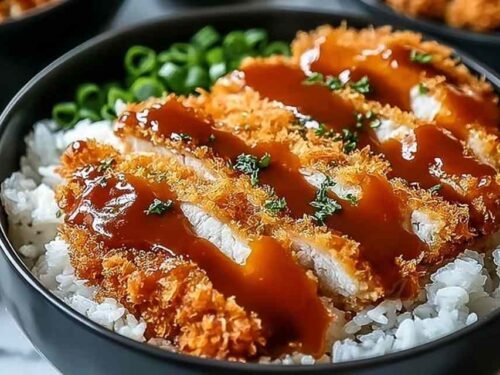
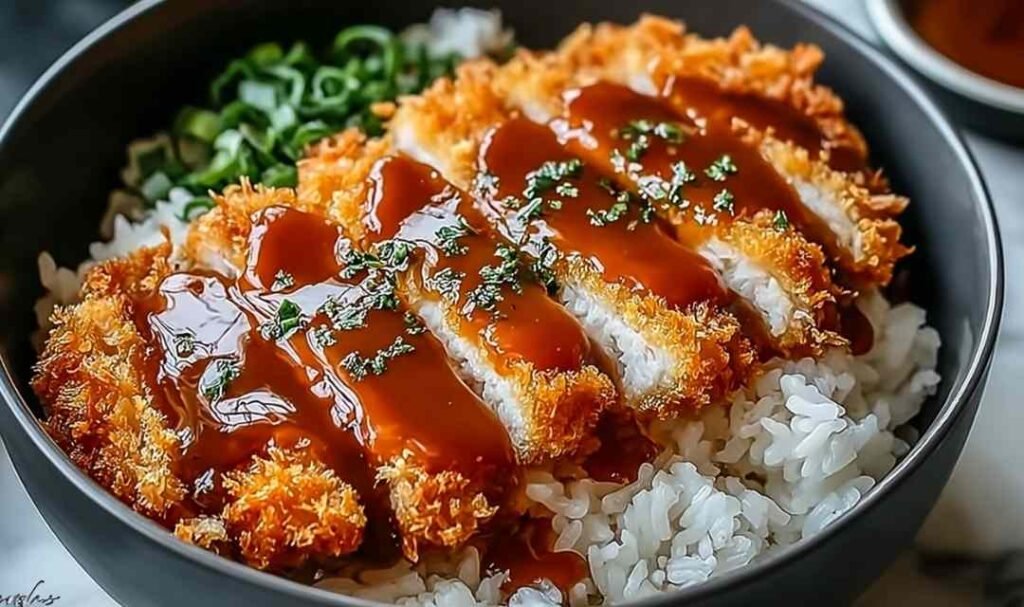
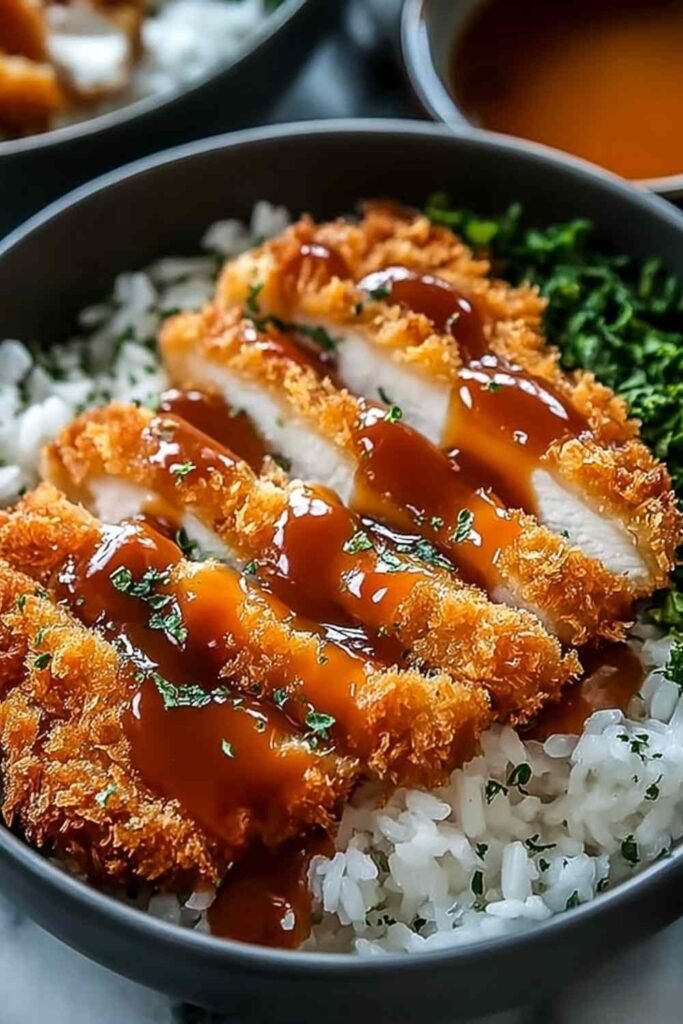
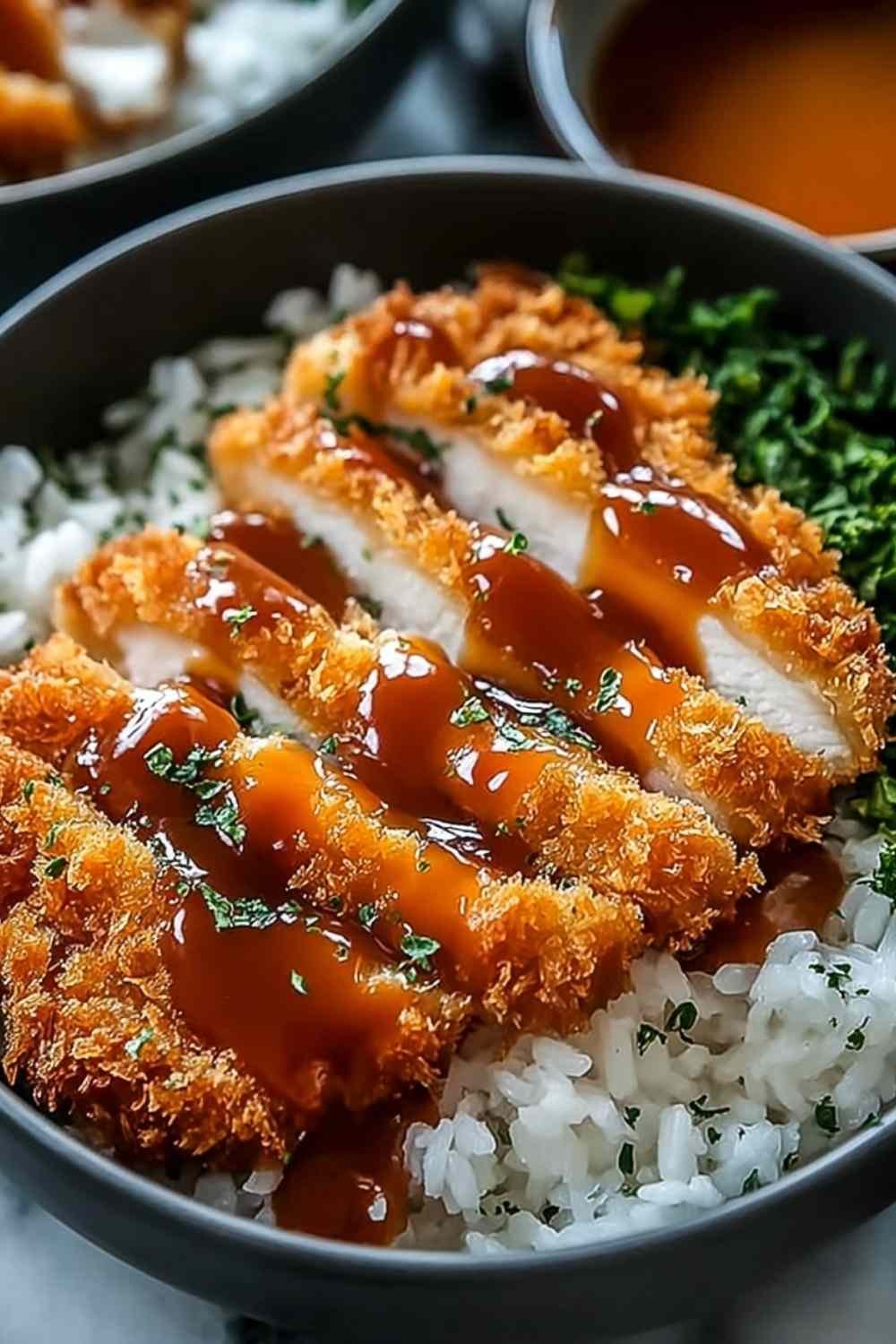
Japanese Katsu Bowls are one of those dinners that feel like a true treat but come together in just 30 minutes on a weeknight. Crispy panko-breaded pork or chicken cutlets, fluffy rice, and a rich homemade tonkatsu sauce all layered into one deeply satisfying bowl. I made these for the first time on a rainy Tuesday when I was craving something comforting and different, and the crispy crunch of that first bite had everyone at the table quiet in the best possible way.
What makes this recipe special is the contrast. The panko crust stays shatteringly crispy while the meat inside stays juicy and tender. The tonkatsu sauce is tangy, sweet, and savory all at once, and it ties the whole bowl together. Once you make it from scratch, you will never reach for the bottled version again.
You are in for a treat!
Table of Contents
Ingredients for Japanese Katsu Bowls
I always keep panko breadcrumbs stocked because they give a crunch that regular breadcrumbs simply cannot match. For this recipe, fresh oil at the right temperature is just as important as the breading itself. Here is everything you need:
For the Katsu:
4 boneless pork chops or chicken breasts (pounded to about 1/2 inch thick for even cooking)
Salt and pepper to taste
1 cup all-purpose flour
1 large egg (beaten)
1 cup panko breadcrumbs – My preference is Japanese-style panko for the crispiest result
Vegetable oil for frying (enough to come about 1/2 inch up the side of the pan)
For the Tonkatsu Sauce:
1/2 cup ketchup
2 tbsp Worcestershire sauce
2 tbsp soy sauce
2 tbsp mirin or rice vinegar – I recommend mirin if you can find it, it adds a subtle sweetness that rice vinegar alone does not replicate
1 tbsp brown sugar
1 tsp Dijon mustard (optional but adds depth)
For Serving:
4 cups cooked white or brown rice
2 cups shredded cabbage or iceberg lettuce – In my experience, shredded cabbage holds up better under warm chicken than lettuce does
Optional toppings: sliced green onions, sesame seeds, pickled ginger, or a fried egg
I recommend setting up your breading station before anything else and making the tonkatsu sauce while the oil heats. Having everything ready in sequence is what keeps this recipe at the 30-minute mark without feeling rushed.
Step 1: Place the pork chops or chicken breasts between two sheets of plastic wrap and pound to about 1/2 inch thickness using a meat mallet or heavy skillet. Even thickness is critical for even cooking throughout. Season both sides generously with salt and pepper.
Step 2: Set up a breading station with three shallow bowls: flour in the first, beaten egg in the second, and panko breadcrumbs in the third. Dredge each cutlet in flour and shake off the excess, then dip fully in the beaten egg, and finally press firmly into the panko so it coats every surface. Press the breadcrumbs in gently with your hands to help them adhere.
Step 3: Pour vegetable oil into a large heavy skillet to a depth of about 1/2 inch. Heat over medium heat until the oil reaches 350 degrees F. If you do not have a thermometer, drop a small pinch of panko into the oil. It should sizzle immediately and turn golden within about 30 seconds. Oil that is too cool will make the crust greasy and soggy instead of crispy.
Step 4: Fry each breaded cutlet for 3 to 4 minutes per side until deep golden brown and cooked through to an internal temperature of 165 degrees F for chicken or 145 degrees F for pork. Do not crowd the pan as this drops the oil temperature and ruins the crust. Fry in batches and transfer each finished cutlet to a wire rack or paper towel-lined plate to drain. A wire rack is better than paper towels if you have one because it keeps the bottom crust from steaming and going soft.
Step 5: While the cutlets drain, combine the ketchup, Worcestershire sauce, soy sauce, mirin, brown sugar, and Dijon mustard in a small saucepan. Stir over low heat for 2 to 3 minutes until the sugar dissolves and the sauce thickens slightly. Taste and adjust seasoning.
Step 6: Slice each katsu cutlet into strips across the grain. Divide the cooked rice among 4 bowls, add a layer of shredded cabbage, then arrange the sliced katsu on top. Drizzle generously with tonkatsu sauce and add your desired toppings. Serve immediately while the katsu is still hot and crispy.
What to Serve with Japanese Katsu Bowls
Japanese katsu bowls are rich and filling, so the best sides add freshness, crunch, or a light contrast that balances the crispy fried cutlet and savory sauce.
Shredded Cabbage Slaw: A simple slaw dressed with rice vinegar and a pinch of salt is the most traditional pairing with katsu. It cuts through the richness of the fried cutlet and adds a cool, crunchy texture the bowl needs.
Japanese BBQ Chicken Fried Rice: If you want to make it a full spread, the Japanese BBQ Chicken Fried Rice from the site is a natural companion dish that stays on theme with the Japanese-inspired flavors of this bowl.
Skinny Sesame Chicken and Broccoli: For a lighter side with Asian-inspired seasoning, the Skinny Sesame Chicken and Broccoli works beautifully alongside the katsu bowl and adds a vegetable element that balances the plate.
Miso Soup or Light Broth: A warm bowl of simple miso soup is the classic Japanese restaurant pairing with katsu. It adds warmth and umami without competing with the tonkatsu sauce.
Dumpling Ramen Bowl: For a more indulgent spread on a weekend, the Dumpling Ramen Bowl pairs naturally with the Japanese flavor profile of this dish and makes a complete themed dinner.
Crispy Oven Roasted Cauliflower: If you want a lighter vegetable side, the Crispy Oven Roasted Cauliflower adds satisfying crunch and pairs well with the tonkatsu sauce if you want to drizzle a little extra over it.
Honey Glazed Carrots and Green Beans: A simple vegetable side like Honey Glazed Carrots and Green Beans rounds out the bowl meal with sweetness and color that complements the savory katsu without overpowering it.
Store leftover katsu cutlets separately from the rice, cabbage, and sauce in airtight containers in the refrigerator for up to 3 days. For longer storage, freeze the cooked and cooled cutlets individually wrapped in plastic wrap inside a freezer-safe bag for up to 2 months. Thaw overnight in the refrigerator before reheating.
To reheat and restore crispiness, place the katsu on a wire rack set over a baking sheet and warm in an oven or toaster oven at 375 degrees F for 10 to 15 minutes. I recommend avoiding the microwave for reheating the katsu because it makes the panko crust soft and chewy. The sauce can be reheated gently in a small saucepan or in the microwave in 30-second intervals.
Pro tip: The tonkatsu sauce keeps in a sealed jar in the refrigerator for up to 1 week and tastes even better after a day or two. Make a double batch and use it as a dipping sauce or burger condiment throughout the week.
Frequently Asked Questions
Can I use chicken instead of pork for this recipe?
Yes, boneless skinless chicken breasts work perfectly here. Pound them to about 1/2 inch thickness just like the pork chops and cook to an internal temperature of 165 degrees F. Chicken thighs also work well and stay juicier than breasts if you prefer a more forgiving cut.
How do I keep the panko crust from falling off during frying?
Press the panko firmly onto the surface of the cutlet after dipping in egg and let the breaded cutlets rest for 5 minutes before frying. This helps the coating adhere. Also make sure the oil is fully at temperature before the cutlet goes in. Cold oil causes the breading to loosen and absorb excess grease.
Can I bake the katsu instead of frying it?
Yes, for a lighter option bake at 425 degrees F on a wire rack set over a baking sheet for 18 to 22 minutes, flipping once halfway through. Spray the breaded cutlets with a light coat of cooking spray before baking to help the panko brown. The crust will not be quite as shatteringly crispy as fried but still very good.
Conclusion
Japanese katsu bowls bring restaurant-quality comfort to your own kitchen in just 30 minutes. Crispy, juicy, and deeply satisfying with that homemade tonkatsu sauce pulling everything together. Give this one a try on your next weeknight and enjoy every delicious bite!
4boneless pork chops or chicken breastspounded to about 1/2 inch thickness
salt and pepperto taste
1cupall-purpose flourfor dredging
1large eggbeaten
1cuppanko breadcrumbsJapanese-style preferred for crispiest result
vegetable oilfor frying, enough to come about 1/2 inch up the side of the pan
0.5cupketchupfor tonkatsu sauce
2tbspWorcestershire saucefor tonkatsu sauce
2tbspsoy saucefor tonkatsu sauce
2tbspmirin or rice vinegarmirin preferred for tonkatsu sauce
1tbspbrown sugarfor tonkatsu sauce
1tspDijon mustardoptional, for tonkatsu sauce
4cupscooked white or brown ricefor serving
2cupsshredded cabbage or iceberg lettucecabbage holds up better under warm cutlets
Equipment
Large heavy skillet
Three shallow breading bowls
Meat mallet or heavy skillet for pounding
Wire rack or paper towel-lined plate
Small saucepan
Meat thermometer
Measuring cups and spoons
Method
Pound pork chops or chicken breasts to about 1/2 inch thickness using a meat mallet or heavy skillet. Season both sides generously with salt and pepper.
Set up a breading station: flour in the first shallow bowl, beaten egg in the second, and panko in the third. Dredge each cutlet in flour and shake off excess, dip fully in beaten egg, then press firmly into panko to coat all surfaces. Let rest for 5 minutes before frying.
Pour vegetable oil into a large heavy skillet to a depth of about 1/2 inch. Heat over medium heat until the oil reaches 350 degrees F. Test by dropping a small pinch of panko into the oil. It should sizzle immediately and turn golden within 30 seconds.
Fry each cutlet for 3 to 4 minutes per side until deep golden brown and cooked through to an internal temperature of 165 degrees F for chicken or 145 degrees F for pork. Fry in batches to avoid crowding the pan. Transfer to a wire rack or paper towel-lined plate to drain.
While the cutlets drain, combine ketchup, Worcestershire sauce, soy sauce, mirin, brown sugar, and Dijon mustard in a small saucepan. Stir over low heat for 2 to 3 minutes until the sugar dissolves and the sauce thickens slightly.
Slice each katsu cutlet into strips across the grain. Divide cooked rice among 4 bowls, add a layer of shredded cabbage, then arrange the sliced katsu on top. Drizzle generously with tonkatsu sauce and add optional toppings. Serve immediately.
Notes
Pound meat to about 1/2 inch thick for even cooking. Make sure oil reaches 350 degrees F before frying to avoid greasy soggy katsu. Press panko firmly onto the cutlet and let rest 5 minutes before frying to prevent the crust from falling off. Reheat leftovers in the oven at 375 degrees F for 10 to 15 minutes to restore crispiness. Tonkatsu sauce keeps in the fridge for up to 1 week. Freeze individually wrapped cutlets for up to 2 months.
a recipe developer, food enthusiast, and busy parent based in Denver, CO. I created Yumnights because I believe that delicious, healthy dinners shouldn’t require hours in the kitchen or a culinary degree to master.